
The Healers: Why You’d Never Want Them Treating You
Note for New Readers
If you haven't read A Healer yet, don't worry: most of this information appears in the first chapter. Bon appétit.
There's no doubt that in the Sac, the nobles are the undisputed lords. They enjoy what the ancient Romans called ius vitae necisque—the right of life and death over everyone else, whether profession members or commoners. If your ears are pierced (low and mid-ranking nobles) or cut into delicate strips (the royal clan), then you're Judge Dredd: YOU are the law.
One step below the nobles—a VERY large step—are the Healers. Primus inter pares among the professions, they're unofficially the most important social class with the greatest responsibilities.
They are not, obviously, simple doctors. They're largely priests of the Mother's cult, as well as executors of her greatest will: to feed her. They're the ones who perform the Selection, the ritual sacrifice that awaits every common person upon turning forty.
Forget the doctor who treats the wounded, perhaps risking his own life, placing himself between a stretcher and a horde of enemies wanting to finish the job. A Healer from Ravenous Mother would step aside and demand they not make too much of a mess during the massacre.
Healers save lives, yes. But they also decide which lives aren't worth saving. A thirty-eight-year-old worker with arm degeneration? Perhaps not worth treating—in two years he'll be Selected anyway. A child born with a malformation? Better eliminate it now, before it becomes a burden on society.
It's not (to them) cruelty. It's efficiency. In Ravenous Mother, a person's usefulness is the cardinal virtue upon which the entire Sac rests.
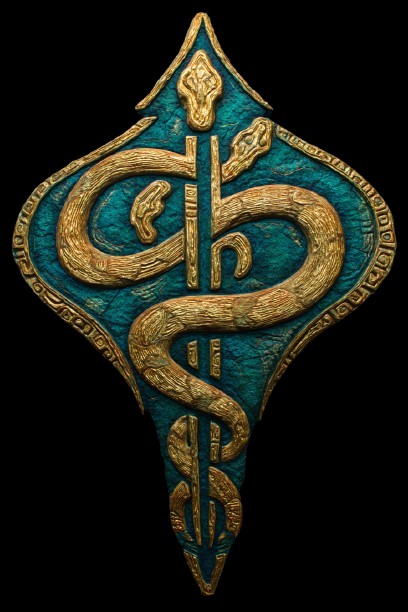
Like the other professions, they have their own tower, divided into multiple floors with different purposes: dormitory area, classrooms (including the infamous Hall of Pain!), common areas, libraries, research laboratories. Healers are organized into a rigid hierarchy called the Four Circles. From the First Circle of novices to the Fourth Circle of masters, each step requires years of study, trials, and of course pain.
They dress in crimson and have nails of the same color—the result of a painful symbiosis with organic receptors that takes three years to complete. Those nails are as hard as petroite and as sharp as blades. They're as much a medical instrument as a symbol of their social class and, when needed, a weapon.
Like every profession, healers also have their own system of glyphs. Their system is built upon thirty-six major glyphs, from which hundreds of minor variations derive. Every sign carries a fixed, immutable meaning, unchanged across generations. A text written centuries ago can be read by any modern Healer without effort.
This rigidity reflects their philosophy: knowledge must not evolve freely, but remain controlled, preserved, and protected from distortion.
Other professions follow very different paths. Cartographers, for instance, use notoriously chaotic glyphs, often inventing personal symbols that make their texts nearly impossible to standardize. Noble glyphs, on the other hand, are entirely inaccessible to outsiders, reinforcing their separation from the rest of society. Only the simplified common glyphs circulate publicly, stripped of complexity and used for basic communication.
Their moral code is the Four Protocols:
-
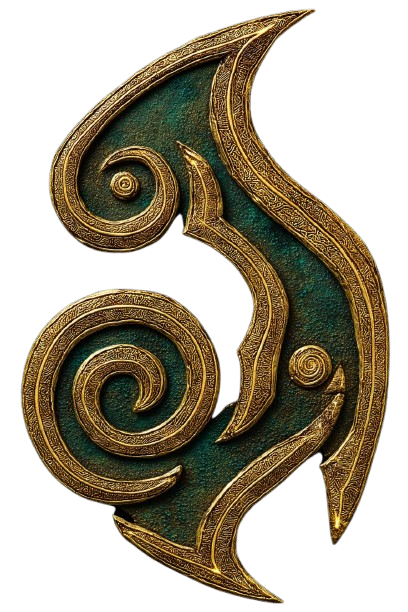 All for the Mother — The Mother has absolute priority. Justifies the Selection.
-
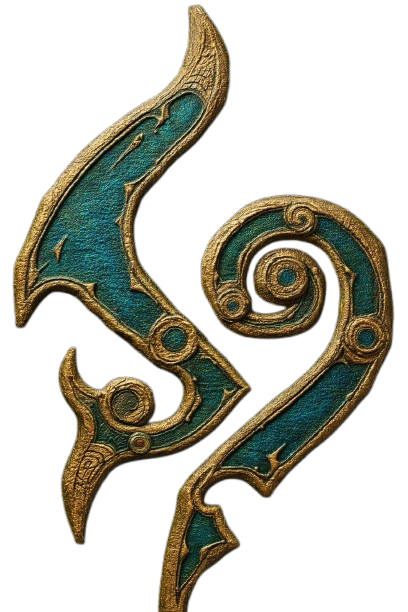 All for humanity — Humanity must prosper in its purest form. Justifies eliminating the "defective."
-
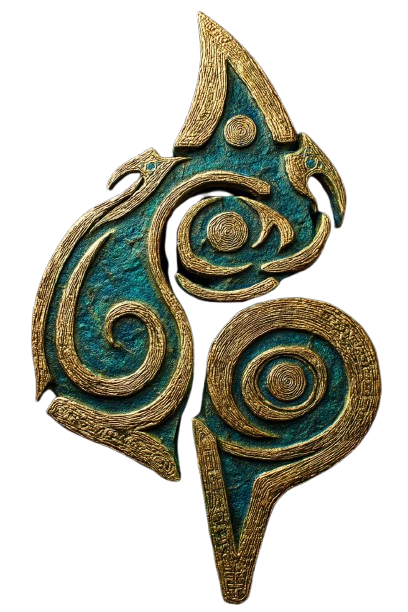 All for knowledge — Knowledge must be preserved and protected. Sharing it with non-Healers is punishable by death.
-
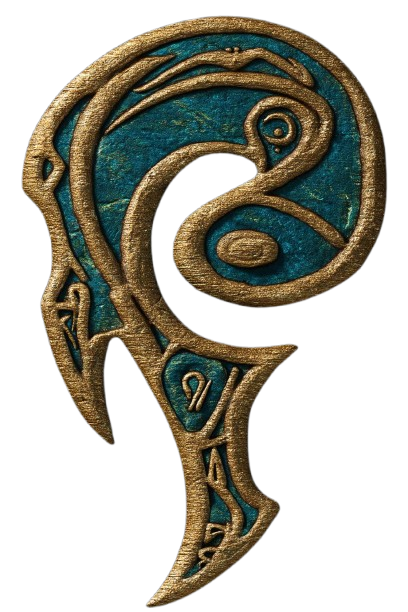 All for mercy — The most enigmatic. Only Fourth Circle members know its true meaning.
The Four Protocols are known in general terms, but each Circle has initiatic access to the related technical knowledge.
If there's something deeply disturbing about the Healers, something that goes beyond their social function, it's their absolute devotion to the Four Protocols. They don't question themselves, they don't ask moral questions (not that the rest of humanity inside the Sac is much more empathetic). The Protocols answer everything. Every decision, every death, every life saved or sacrificed finds justification in the code.
Terminology
Some terms you'll encounter when dealing with Healers:
- Crimson nails — Distinctive characteristic of Healers, whose nails are pigmented red through symbiosis with organic receptors. Extremely hard and sharp, they require three years of pain to develop completely.
- Circles — Internal hierarchy system within the Healer profession. From First Circle (novices) to Fourth Circle (masters), it organizes Healers according to competence and seniority. The Fourth Circle forms the profession's decision-making council and has access to the most secret knowledge.
- Extractor — Medical instrument composed of a translucent spine connected to a pulsing vesicle. Used to draw blood or other bodily fluids. Causes intense pain during use but is very effective.
- Memberblade — Living surgical instrument that appears as a translucent organic blade. Can vibrate and change color when annoyed. Very sharp but sensitive to heat and inappropriate touch.
- Hall of Pain — Medical torture chamber used for "intensive teachings." Uses chemicals and instruments to inflict controlled pain for educational purposes.
- Bioscope — Analysis instrument used by Healers to examine biological samples, composed of observational membranes that can be adjusted to magnify and study details.
- Dermaloid — Large red-violet organism used for surgical training, with consistency identical to human skin. Equipped with defense mechanisms that can make it dangerous if handled improperly.
- Grafts — Medical procedure in which nutritive or therapeutic tissue is transplanted into a host organism. Requires great precision to avoid rejection.
- Greater Analgesic Vesicle — Medical organism used to alleviate pain during invasive surgical operations. Part of the healers' therapeutic arsenal.
- Membrane-blackboard — Living educational surface used in classrooms, which can be inscribed with stilettos for writing. It possesses an orifice that, if stimulated correctly, allows erasing incisions by making wounds heal.
- Membrid — Sewer creature the size of a fist, with translucent exoskeleton and thread-like legs. Can hibernate for decades. Extremely sensitive to certain chemical compounds that kill it violently.
- Neurovegetative Polyp-fungus — Medical organism used to treat lower limb paralysis. One of many symbiotic organisms cultivated in the healers' greenhouse.
-
Four Protocols — The four fundamental principles that govern every aspect of healers' lives.
- First Protocol - All for the Mother: The Mother has absolute priority over every other consideration. It is the fundamental basis of all medical knowledge and society itself.
-
Second Protocol - All for humanity:
Humanity must prosper, but only in its purest and healthiest form.
- Justifies the merciful elimination of compromised births and malformations.
- Includes the principle that "a healthy mind dwells in a healthy body."
-
Third Protocol - All for knowledge:
Prescribes the preservation and transmission of medical knowledge.
- Also mandates protection from those unworthy of possessing it.
- Sharing knowledge with non-healers is punishable by early Selection.
-
Fourth Protocol - All for mercy:
The mercy necessary when there is no more hope.
- The most enigmatic and controversial Protocol.
- Its true meaning is revealed only to Fourth Circle members.
- Selection — Sacrificial ritual in which people are offered to the Mother once they reach the predetermined age (traditionally 40 years for commoners and profession members). Nobles are exempt from Selection, able to live until natural death. Some people offer themselves voluntarily before their time, overcome by religious fervor or desperation.
- Stiletto — Thin, sharp petroclast instrument used for precise incisions on membranes and living tissues.
- Tower — Multi-story building destined for professions and nobles. Unlike common dwellings, which grow organically from the Sac's floor, towers are complex structures that require the coordinated intervention of many architects. Inside some towers, living tissues are particularly reactive and sensitive, with biological security systems that respond to intruders. Healers' tower: Pyramidal building that houses the medical profession. It contains classrooms, laboratories, greenhouses, lodgings, and the library. Organized on multiple floors with biological security systems. Noble tower: The most imposing of towers, with six floors and a conical dome. Seat of political power and residence of the noble chief and his family.
- Viscivein — Elongated, limbless aquatic creature, used to extract medicinal enzymes. Very sensitive and can become aggressive if handled incorrectly.
Comments