

No hand-holding.
Street fighters, ex-assassins, a city that lives and dies by salt. And two twins you wouldn't want to run into in a dark alley.
If you're looking for someone to explain things to you, you picked the wrong book.
I need to find the time to create a tag — a special badge, something that signals right at the top of a review that this book doesn't hold the reader's hand. I consider it the greatest respect a writer can show: not underestimating the intelligence of the person reading.
Embers in the Salt is definitively a no-hand-holding book. It throws you into the murky waters of the prologue and yells "swim or drown." Klood P. Trouvay doesn't explain the terminology, doesn't slow down to wait for you. Readers looking for accessible fantasy have been warned — they will sink. Those who stay will develop some serious swimmer's legs (I'm a professional writer, don't try these metaphors at home).
New Merserat is a port city built on the salt trade. Not a revolutionary setting, but Trouvay makes it breathe: the alleys stink, the social classes cheerfully despise each other. Salt is the economic lifeblood holding everything together. The worldbuilding is never explained — it's absorbed, word by word, context by context.
Syra is the heart of the book. She's not the "badass heroine" from a motivational poster (though she gets close): she's a woman with physical and psychological scars, a past full of contract killings, and a mysterious vial she carries like a relic of something she doesn't want to remember. When we meet her, she's nearly dying in a pit fight. When we leave her, she's still surviving, tooth and nail. In between, she learns to protect someone other than herself.
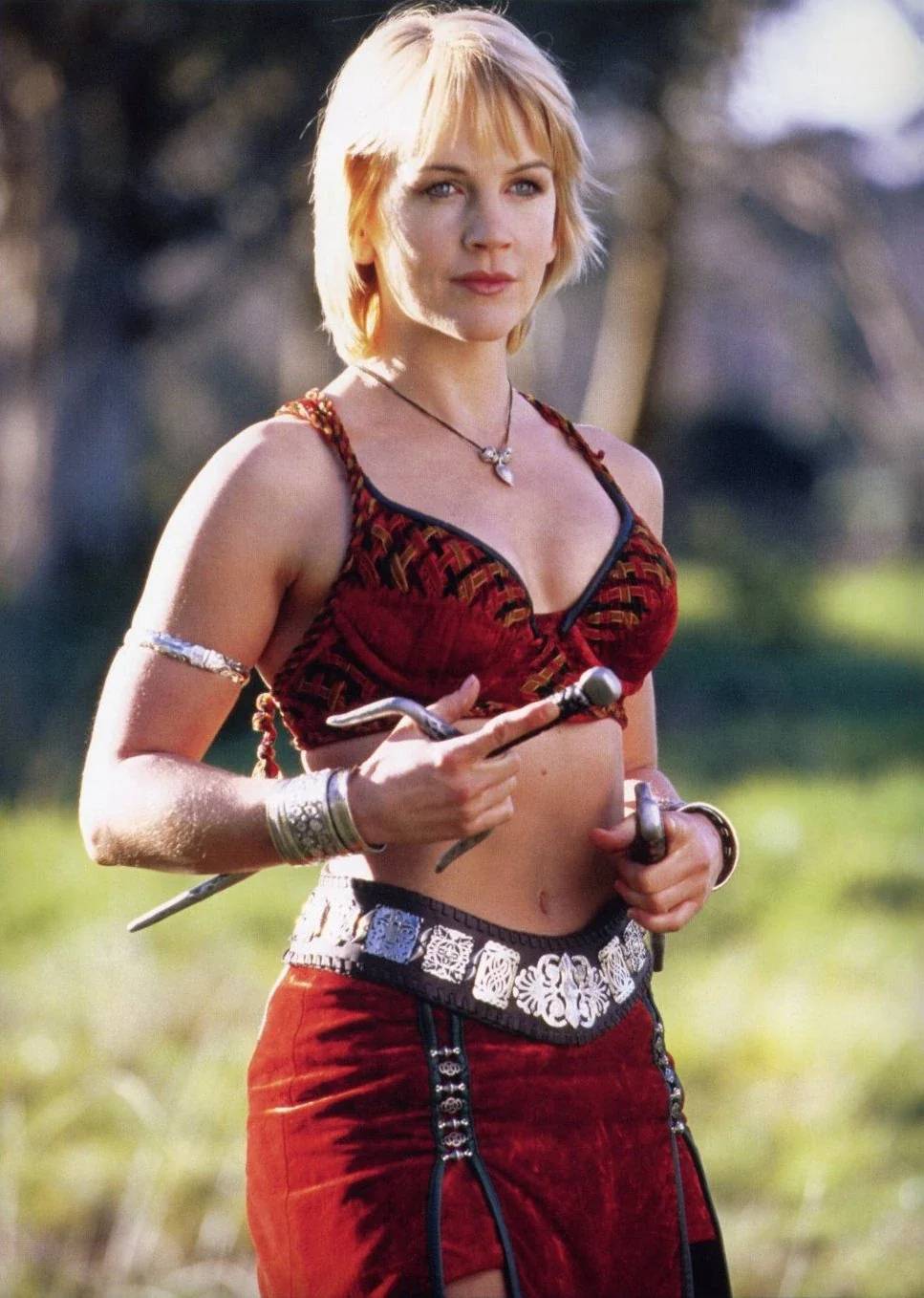
Lienne is that someone: librarian and pharmacist, naive in a way that in New Merserat borders on suicidal. Now, don't laugh and don't close the page (in that order), but... this duo reminded me of Xena and Gabrielle. Take the comparison with a grain of salt — different formats, genres, eras of writing — but the dynamic is the same: Lienne has depth, yet it's clear she exists to make Syra more "Syra." She's her spotlight, her mirror, the reason Syra has to find her way back to being human. It's not a flaw: it's a narrative choice. But if Trouvay wants to develop her into a full co-protagonist in the sequels, she'll need more room to act on her own. For now, Lienne and Gabrielle are the same person.
The fight scenes are genuinely grounded. Bones break, blood gets everywhere, consequences linger. Nothing "heroic" in the clean sense — no action-movie choreography. The pit fight in the prologue is tense and physical, and the rest keeps pace. Good grimdark aims for complex characters, sure, but a well-written brawl never hurts.
Anyone complaining about the violence in Embers in the Salt is probably not the target reader — and that's fine. What matters is being upfront about what you write: blurb, cover, synopsis, all of it should say "if you pick me up, you know what you're getting." Trouvay does this. For the readers he's writing for, he's delivering the real thing. That's the most important thing there is.
The political thread — Saltbird versus Vessein, the salt trade as economic weapon — holds up well alongside the personal story. The narrative never stops to explain politics; instead, the world emerges from the characters, their choices, and their frequent mistakes. Worldbuilding that's present without being overbearing.
And then there's the epilogue:
⚠️ SPOILER: proceed at your own risk.
The Merran twins — Sareth and Kholin — are genuinely unsettling. Not "fantasy villain" unsettling. More like "these people exist and I wish I didn't know that" unsettling.
Trouvay makes a bold choice: the epilogue doesn't follow Syra or Lienne. It follows these two. We watch them duel each other — wounding, healing, wounding again — in a ritual that is part training, part ceremony, part... something else. There's an incestuous undercurrent that's never made explicit but saturates every interaction between them. The way they touch each other, the way they look at each other. The line "It's almost a waste that you're my brother" followed by "Is it?" doesn't leave much to the imagination.
Then we watch them work. They take a girl — Maia — and take her apart. Not just physically. The torture is psychological, methodical, scientific. They take notes. She screams. They continue. And when they're done, they "fix" her — bones realigned, wounds closed, mind sedated — because tomorrow they'll start again.
The scene is hard to read. It's meant to be hard to read. But it serves a purpose: it establishes that the real antagonists aren't the corrupt politicians of New Merserat, but something far worse waiting in the wings of the next book. And the final page reveals that the twins' next target is Lienne.
Not every reader will appreciate this content. The incestuous undercurrent will divide people. The torture will make some close the book. But hey — know yourself, make your choices.
The epilogue creates a sharp tonal break from the rest of the book (what an understatement). It's effective, but jarring. We go from the resolution of Syra's story to... this. A risky move, and deliberately alienating.
A few other minor reservations: the middle section in the salt fields loses some of the urban tension from the opening chapters. New Merserat as a city is more interesting than New Merserat as a salt economy. And some secondary characters — Teom, Noami — remain more sketched than I'd have liked. This is one of those rare cases where a few extra pages would have been welcome.
Embers in the Salt is grimdark, no two ways about it. Competent, atmospheric, with a protagonist that works and antagonists that linger. It doesn't reinvent the genre, but it executes everything with the confidence of someone who knows exactly what they're doing.
And above all: it respects the reader.
Oh, one more thing: BookLife named it an Editor's Pick. Not too shabby!
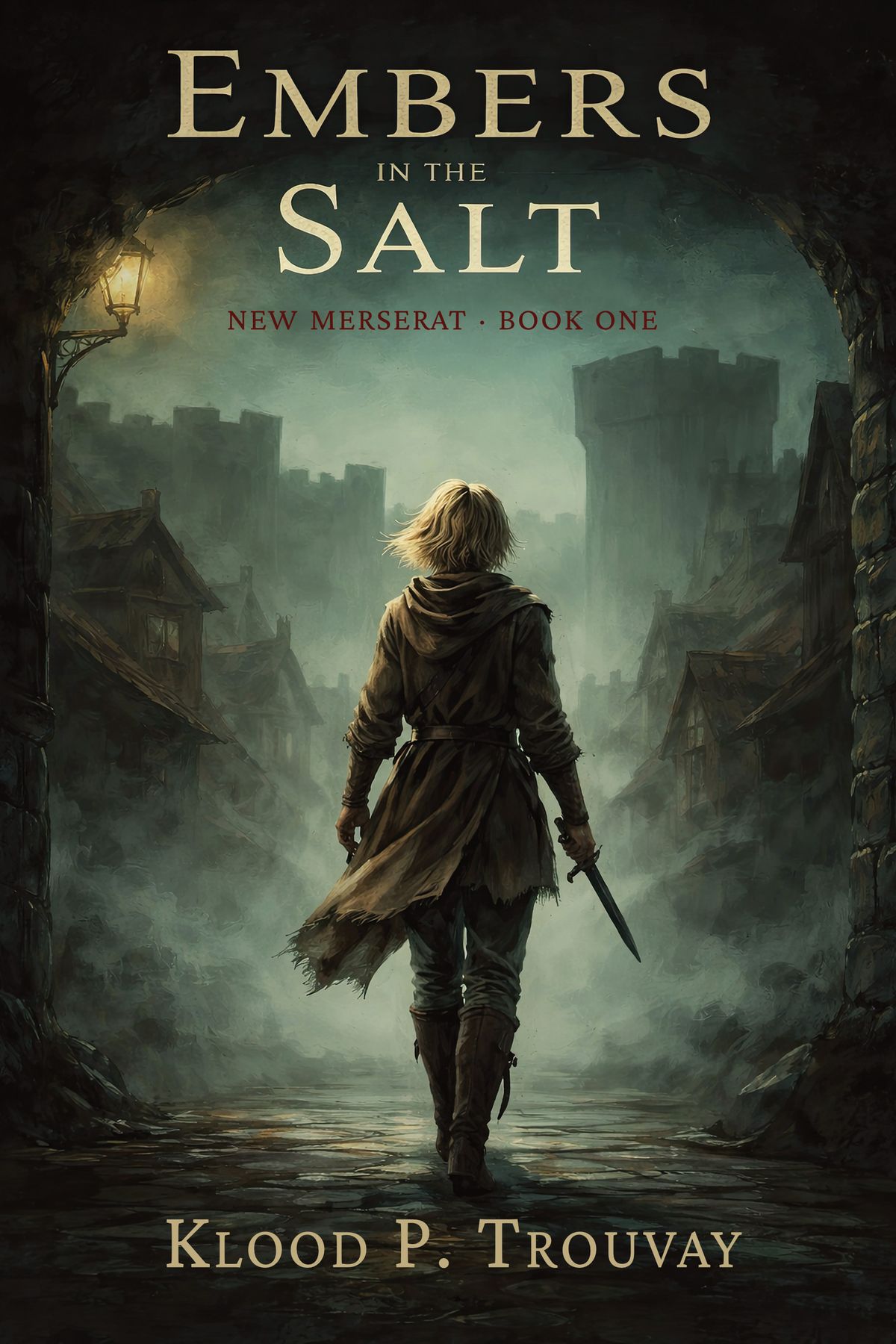
A note on the cover: it's professional and genre-appropriate. The solitary figure walking toward the foggy city immediately reads as "dark fantasy." The warm palette of browns and ochres works, and the knife in hand is an effective touch.
That said, I'm not sold on it. The figure from behind doesn't create immediate emotional connection, and in thumbnail it risks getting lost among similar covers. It's a deliberate artistic choice — Trouvay has explained that he prefers to leave room for "reader projection" — and I respect that. But we're indie: we live and die by the opportunities we know how to seize. This one was left on the table.
Not saying my own covers are a masterclass in marketing → judge for yourself.
That said, it's still a solid cover — infinitely better than plenty of others out there. And trust me, I see a lot of them.
Made it this far and wondering what grimdark actually is?
Here's a good place to start.
Read: What is Grimdark? →ARC copy received in exchange for an honest review.
Comments