November 2026
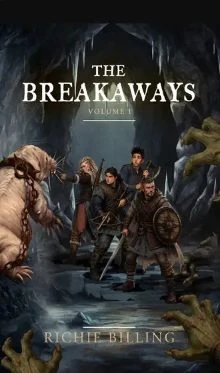
Twenty years cooking for Marteus, the hero. So much for paying your dues.
Ben pitches camp, patches up the wounded, and trains the recruits of the most famous monster hunter in the realm. When he asks for a cut, Marteus laughs in his face. So Ben walks out, and takes with him three colleagues nobody else would have wanted.
I'll admit it: the blurb above reads like the story of the office worker through the ages and across universes. I've worked in plenty of offices, from a three-person shop to cyberpunk multinationals, and I empathized with Ben so much that I wanted to file a union grievance on his behalf.
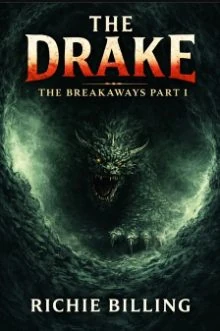
My history with The Breakaways doesn't start with this volume, though. I read The Drake, the first part of the series, months ago as a standalone episode. It was an honest pilot (I never got around to reviewing it back then). Inside the complete volume, it shifts register and becomes the first act of a book that has something to say.

The premise, as I said, is the middle-aged underdog who's had it up to here. Ben is the boss who never wanted the job: forty, half-bald, with too many dead comrades behind him. The rest of the cast is well written too. Hylda is the only one who actually knows the trade (which is exactly why she's angry at everyone, all the time). Lukas is a trapper famous for letting his prey escape, who once even got caught in his own snare. Dudley is a loyal, far-too-naive crossbowman. Together they are the Breakaways, and Marteus calls them traitors.
You know when you quit a job where they underpaid you for years, and while you're clearing out your desk someone yells that you'll never find work again? That's Marteus. Your ex-boss. That guy.
The engine of the book is hunger: the Breakaways are looking for their next dinner. The book is split into four parts, each with its own monster and its own contract, and of the four jobs only one really pays, and it ends up costing them dearly. Ben says yes to clients he doesn't trust because the crew has to eat.
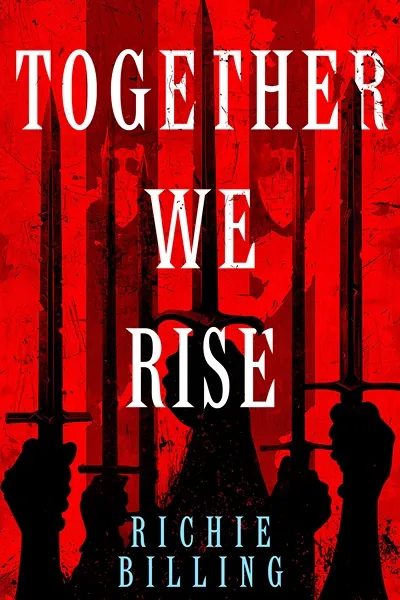
Comedy is Billing's natural register. It was there in The Drake, it's there, darker, in the short story The Ruin of Red Rosko, and it goes missing only when the author decides to write a manifesto, as in Together We Rise (and I think he loses something there: Richie is at his best with the jokes). Given the length of the novel, the comedy in The Breakaways finally gets room to breathe. Lukas kicks the wrong side of a door (it felt like a Simon Pegg gag to me!), goblins complain about their husbands, there's a jug full of spit... well, you get the idea. The jokes come from the characters, and above all they never touch the deaths, which stay real. The book avoids the risk of a laugh barging uninvited into a brutal moment and watering it down.
The book feels a lot like a D&D campaign where the party fails every single roll. That doesn't make it formulaic. The monsters, for example, are almost always somebody else's victims. The goblins the crew has to steal a stone from use it to light the hole they live in, and Ben chews on that for several chapters.
The prose is functional and smooth, full of filter verbs (Ben saw, Ben heard, she felt), and it won't make you underline anything. In three parts out of four, the final knot gets untied by someone who isn't part of the crew, a habit I'd already noticed in The Drake and in Together We Rise. It's the flaw that weighs heaviest, and I hope Richie drops it: it's the main reason the fifth star stays out of reach.
In the fourth part, the protagonists have to get by on their own, and that's exactly why it's the best one. Plenty of threads are left open for future volumes, some of them rather conspicuously. It's a serial, and you can tell. Nothing wrong with that.
As with the comedy, the difference from his shorter work is, in my opinion, all about space. The prose is the same, but a full novel gives the Breakaways time to emerge as people. None of them is a mere plot device. You may never learn Hylda's favorite dish (my guess is "anything edible") or whether Ben played sports as a kid, but all four of them are three-dimensional.
I'll confess a soft spot for broken crews that stay on their feet out of sheer stubbornness. They're my kind of story, to the point that my own saga has one literally called the Broken Squad. If you like watching a bunch of wretches hold each other together, you'll find another in Betrays, a decidedly less likable one.
Each part of the book closes with a full-page plate by Thea Magerand (ikaruna.eu), like a page from a bestiary: the drake, a goblin walking its giant mole on a leash (how cool is that!), the swamp serpent with a pair of boots sticking out of its mouth, and a last creature I'll let you discover for yourselves. The plates come at the end of each part, which is a smart move: when you see them, there's no hype, just satisfaction. Richie also talks about them in a post on Patreon.
The four plates are only in the Extended Edition, which on Richie's site also includes a bonus guide and the audiobook narrated by the author. The Standard Edition has the complete novel, but no illustrations. The Amazon link above takes you to the Extended Edition.
In the interest of transparency: Thea is also the illustrator of my new covers, so take my enthusiasm with a grain of salt. Of course I like them! I'd hang that mole plate in my living room.
So, who is The Breakaways for? It's an enjoyable, quick read, unpretentious but with well-placed flashes of reflection. At a glance, I'd say Richie might be just what you're looking for if you loved Kings of the Wyld but wondered how the band that never becomes legendary gets by, if you like The Witcher's contracts without Geralt's competence (not even a trace of it), or if you want a fantasy that makes you laugh and then, without warning, puts a real death in front of you.
Heads-up: quick doesn't mean light. There's a lot of graphic violence, plenty of swearing, and the odd dirty joke. Nothing unbearable, but if you prefer clean language, consider yourself warned.
The Breakaways started life as a serial. It runs as a free podcast, the sequel comes out one chapter at a time on Patreon, and the volume is available in ebook and paperback, with the author-narrated audiobook included in the Extended Edition. The way Billing has built all of this deserves a piece of its own, and I plan to write one.
Billing writes about a crew fighting to eat. I write about a broken crew trying not to get eaten.
Meet them in Betrays.
ARC copy received in exchange for an honest review.
You Might Also Like
Crews that stay together out of sheer stubbornness, and the worlds that try to break them. More below.
Review
Together We Rise
Richie Billing tells a grimdark revolution through seven POVs in a single day. Real conviction, transparent allegory. Where the balance falls.
 Article
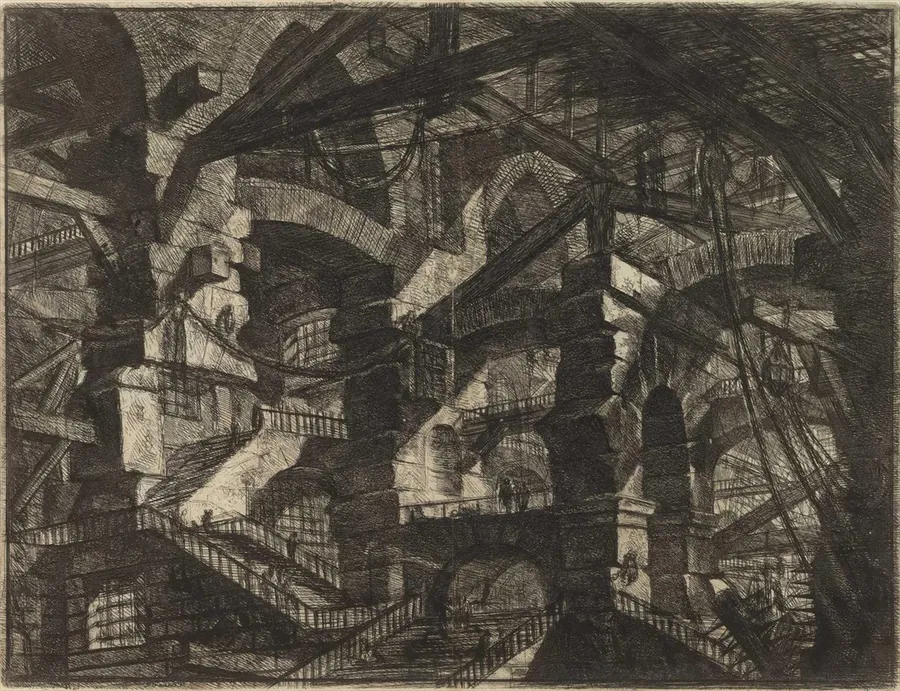
What is Ravenous Mother?
Ravenous Mother is a biopunk dark fantasy series where humanity survives inside a vast living organism. Biological horror meets caste and ritual sacrifice.
 Article
Grimdark: The Fantasy That Doesn't Lie
Discover what grimdark fantasy REALLY is: brutal realism, morally grey characters, and the best grimdark books of 2026. From Glen Cook to R.F. Kuang.
 Book
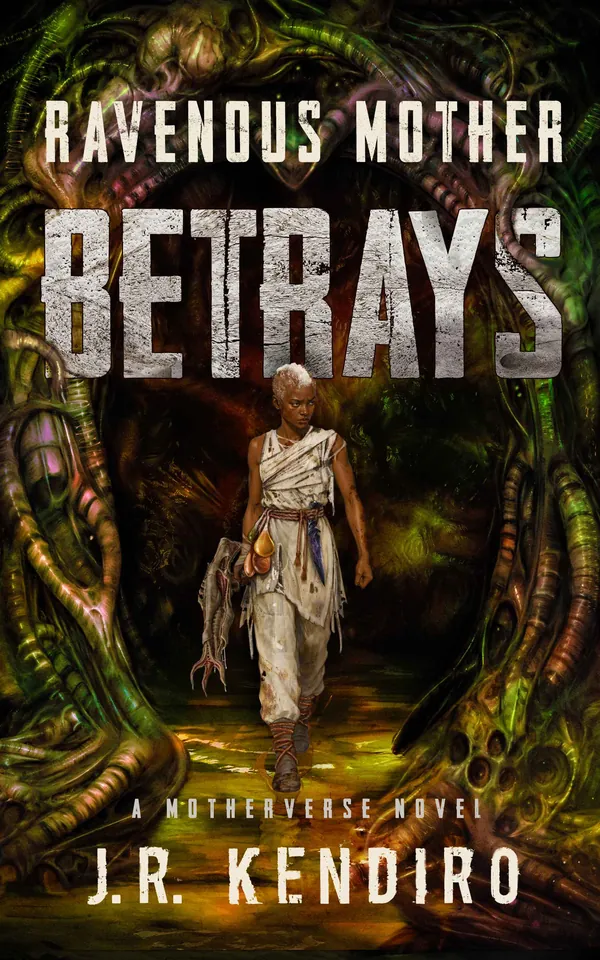
Betrays
Thandie maps veins for a living. Then she finds a threat she is ordered to hide, and becomes a hunted heretic. Book one of the Ravenous Mother saga.
Comments