
What is Biopunk? Definition, Best Books & Why It Matters in 2026
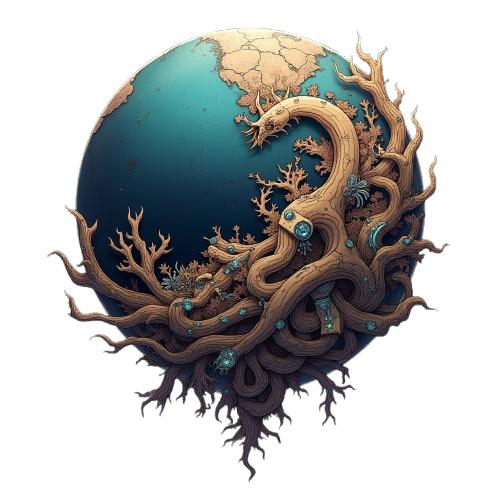
Biopunk is fiction where biology does the job technology usually does, and where somebody owns that biology. In Kameron Hurley's desert novels the cars run on beetles and the lamps are fireflies in a glass jar, and the people who breed the insects are the people who run the planet. That second half is the one everybody forgets when they use the word.
What Is Biopunk?
Every genre with -punk on the end names a substrate and then picks a fight about who owns it.
Cyberpunk names information. The socket in the back of Case's neck is the part everyone remembers, but the genre lives in Ono-Sendai and Tessier-Ashpool, the people who own the network he steals through. Strip the corporations out of Neuromancer and you still have a man with a cable in his head, which I'd probably still read, minus everything that made it cyberpunk.
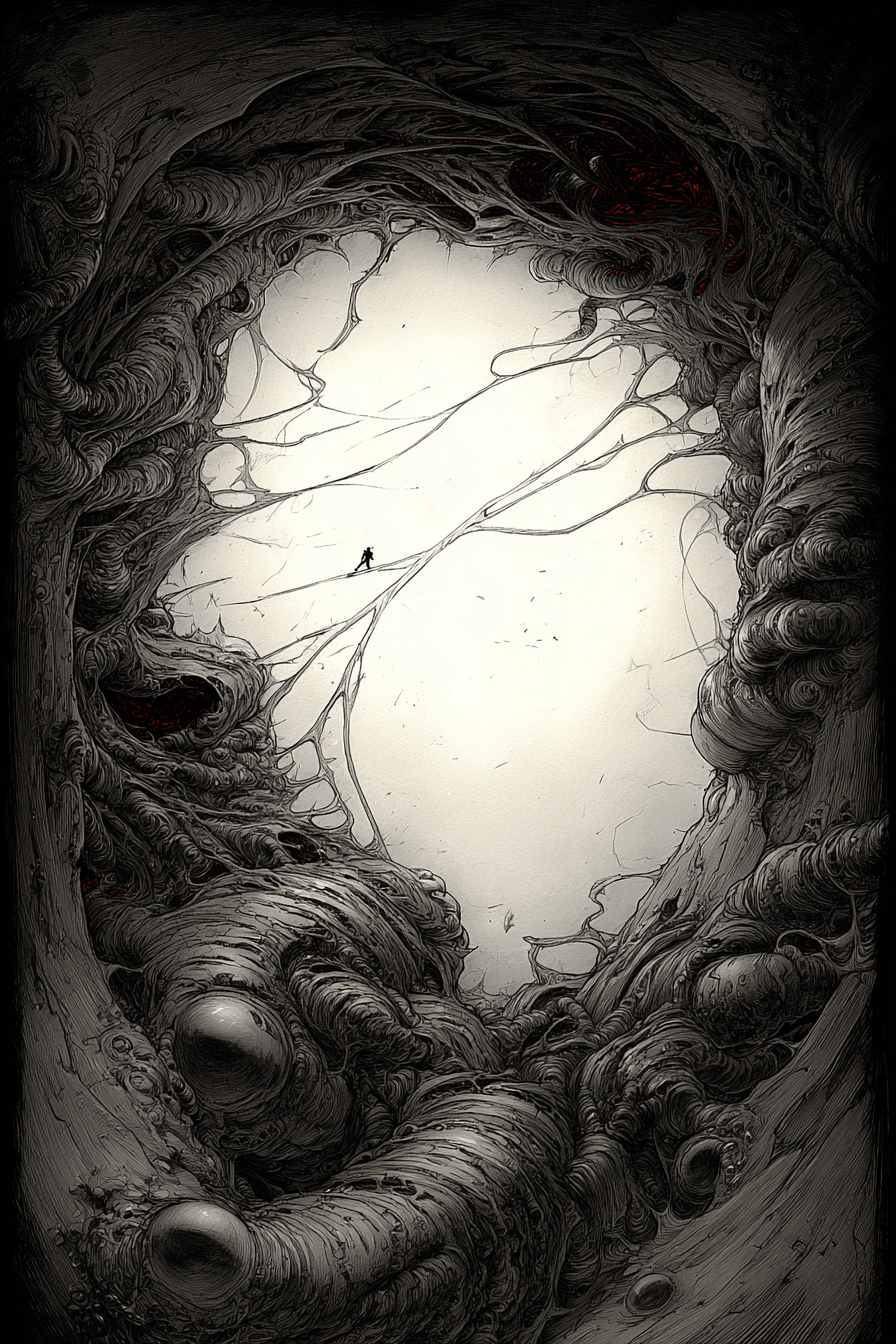
Biopunk names the living, so the fight is over bodies, tissue, fertility, calories and genomes, and whoever controls those controls everything downstream of them. Steampunk, for comparison, names an aesthetic and no conflict of ownership at all, which is why it has stayed a costume: it has goggles where the politics should be.
The definition you'll find in most places runs like this: biopunk is a subgenre of science fiction, and partly of fantasy, exploring the social, ethical and political consequences of advanced biotechnology, usually in dystopian settings. That's true, and I've never once been able to use it, because it fits cyberpunk just as well, along with half of dark fantasy, most grimdark, and a great deal of ordinary science fiction. Any definition that admits everything ends up doing no work at all.
Take a solid story about an unjust society pushed to extremes, and you have dystopia. If characters must constantly choose between different evils, you're in grimdark territory. If all this happens in a world where the supernatural is dark, corrupt, and threatening, you're reading dark fantasy. But if the backdrop is biology—manipulated, rewritten, exploited—and without it the story couldn't exist, then you're in biopunk.
Biological horror is a close cousin, and worth separating out. In The Thing or Alien the biology arrives from outside and the human body is its victim. Biopunk bodies are complicit. The transformation gets imposed on people often enough, but it's also wanted, or inherited, or routine, or holy, and in the books that do it best it is simply how the world has always worked.
One more distinction, and it is an adjective rather than a category: where the flesh came from.
Engineered biopunk worlds were built by people who are still identifiable. Somebody made this, somebody profits, and you could in principle go and punch them. The world stays recognisable as a possible evolution of our own. Margaret Atwood's Oryx and Crake and Paolo Bacigalupi's The Windup Girl belong here.
Inherited biopunk worlds come from a past that can no longer be read. Nobody alive designed anything, the biology is an artefact, and the only technical character in the book is reverse-engineering a black box. Here biology isn't technology, it's cosmology: organisms are mythic, divine, incomprehensible, and society lives literally inside the body of something greater. This is the territory of China Miéville's Perdido Street Station and of the British New Weird at its most organic. If you enjoy Miéville, you've been reading biopunk for years.
In practice this changes who the enemy is. An engineered world gives you somebody to blame and occasionally somebody to shoot. An inherited one leaves you negotiating with a system that has no representatives, no records and no complaints department, which is slower and usually worse for everybody in it. What it doesn't do is decide whether a book counts — a world where nobody remembers how the biology was built can still be run entirely on who gets to own bodies, and Hurley's Legion novels are the proof of that.

Ravenous Mother is set inside a living organism.
No metal, no stone, no mercy.
Author's Note
Two principles run this site: I like order, and I hate wasting time, mine or yours. You've now had the definition, which is the part I'd want handed to me first.
Below is how I test a book against it, and then the ordinary business of a genre guide: where this stuff came from, the themes it keeps circling, who has written it, which books sit just outside the line, and where my own saga fits. The reading lists are further down if you'd rather skip the arguing and get to the buying.
See also:
- 10 Essential Biopunk Works
- Grimdark: The Fantasy That Doesn't Lie
- Dark Fantasy: The Genre That Sleeps With the Lights Off
- Ravenous Mother: A Biopunk Saga
So, How Do You Test a Book?
I did not invent the test. Theodore Sturgeon did, in the early fifties, and he was talking about science fiction: a science fiction story is one built around human beings, with a human problem and a human solution, which "would not have happened at all without its scientific content." He also said, sensibly, that he meant it as a description of a good example rather than a border checkpoint.

Apply that to biology instead of science and you get a procedure. Apply it twice, once for each half of the word, and it starts to discriminate. (I'd been using some clumsier version of this for years before I found out Sturgeon got there first, which was equal parts flattering and deflating.)
First question. Remove the biology. Does the story still happen? On Kameron Hurley's Umayma, vehicles run on beetles, lamps are fireflies in glass, houses are hardened secretions, and the magicians command insects. Remove the bugs and you lose transport, war, medicine, magic and the economy in one go. That is a clean pass.
Second question. Remove the power structure that exploits the biology. Does the story still happen? Bacigalupi's calorie companies own the seeds. Atwood's corporations own the genomes. Take the ownership out of either and the plot stops having a reason to move.
Pass both and you're holding biopunk. Pass the first and fail the second and you've got organic weird instead: a world made of meat that nobody is making money from. Plenty of those books are better than the ones I'm defending here, and they belong on another shelf anyway. Fail the first and pass the second and you're in ordinary dystopia, which is where Nineteen Eighty-Four sits — Winston's body is certainly where the punishment lands, but the power itself travels through paperwork, telescreens and other people's children.
The obvious objection to any removal test is that it proves too much. Take the mud, plague and feudalism out of a grimdark novel and that book changes too, so why isn't mud a genre? Sturgeon already handled this, and the answer is in how he phrased it: he asks whether the story could have happened, which is a question about cause rather than about texture. Nobody's plot turns on the mud. Take it away and the same events happen with cleaner boots. Whereas the insects on Umayma are sitting in the slot that metallurgy fills in a medieval setting and silicon fills in ours — the load-bearing one, the one you check when you want to know why the lamps are on. So when you look at a book, look at the load-bearing walls and not the paint.
How Far Up Does the Ownership Go?
Once a book has passed both questions, one thing is left to establish: the scale at which the flesh is owned. There are four steps, and they go up.
At the first step ownership is retail. Bodies are bought and sold one at a time, across a counter, in a world that still has stone and iron in it. Hurley's novelette Elephants and Corpses lives here, with corpses purchased at the dock and kept on ice, because a body is a vehicle you can rent.
At the second, ownership is at the level of the species. Flesh is intellectual property, somebody holds the patent, and the lawsuit is a real threat. This is Bacigalupi's territory, where the calorie men own the seed and the generippers own what the seed becomes.
At the third, ownership runs through another species. You don't command the world directly, you command the organisms that run it, and whoever commands them commands you. Umayma again, where the magicians hold the insects and everybody else holds their breath.
At the fourth there is no outside. The flesh is the world, which makes owning it a theological problem and makes the ruling class a priesthood administering a god. This is where my own books live, and I'll come back to it at the end.
None of this is a score, and it certainly isn't a ranking. A book sits on one of the four steps, the step tells you where its politics live, and then you can get on with reading it.
Where Does This Stuff Come From?

The genealogy is complex because biopunk didn't emerge from a single founding moment. Its roots dig into very different soil.
Let's start with David Cronenberg's body horror aesthetic. Films like Videodrome (1983), The Fly (1986), and eXistenZ (1999) established a rich visual and conceptual vocabulary: the body as territory of transformation, flesh as technology, mutation as inevitable destiny. More than science fiction, Cronenberg was writing biological prophecies.
Then there's organic science fiction. Octavia Butler's Xenogenesis trilogy (1987-1989) imagined aliens whose technology is biological—spaceships made of living tissue, civilizations built on genetic manipulation as art form. Tool and organism become one, and this fusion is the genre's conceptual heart.
Finally, there's cyberpunk itself. In the roaring '80s, it imagined a future of circuits, neon, and neural interfaces—the body as hardware to be upgraded. While cyberpunk built futures of silicon and steel, biopunk did the same with membranes, veins, and blood. It was a response, often fierce, to the dehumanization of the machine... with another kind of dehumanization.
The word itself has a murky history. It circulated in and around the cyberpunk scene from the late eighties onward, and Bruce Sterling's Schismatrix (1985) is routinely cited as the proto-biopunk novel, with its human factions split between mechanical and biological enhancement. Nobody agrees on who said it first. What everybody agrees on is the shape of the idea: if cyberpunk explored the human-machine interface, biopunk explored the human-organism one.
There is also a second Biopunk Manifesto, and it has nothing to do with novels. In January 2010, Meredith L. Patterson delivered one at a UCLA symposium on citizen science, modelled on Eric Hughes's A Cypherpunk Manifesto. It is about biohacking: cheap lab equipment, open protocols, the right to run an experiment without a licence. It is worth knowing because it proves the point. When actual biopunks — people with pipettes rather than paperbacks — took the word for themselves, the fight they described was about who controls access to living systems. The political half of the word was there from the beginning, outside fiction. The bookshelf is the place that lost it.
Last but certainly not least: Katsuhiro Otomo's Akira (1982-1990). In Akira, mutation becomes apocalyptic force—biology as weapon of mass transformation. Though often classified as cyberpunk, the manga contains powerful biopunk elements: bodies mutating beyond control, flesh becoming weapon, biology escaping human will.
Japanese manga more broadly explored this territory with far fewer reservations than the West—Parasyte, Blame!, Biomega—accepting the monstrosity of the transformed body without the filter of moral disgust.
The Themes That Keep Returning
Biopunk (and I) is obsessed with a limited number of questions that return in different forms. If cyberpunk imagines a world dominated by information, biopunk imagines a world where life itself is resource, technology, and weapon.
The body as landscape. In biopunk, the body isn't a container for the self—it's territory to be explored, mapped, colonized. Internal geographies become literal: veins as rivers, organs as cities, membranes as political borders. This metaphor allows discussion of power in ways traditional science fiction cannot. Who controls the body? Who decides its boundaries?
Biopower and social control. Michel Foucault theorized biopower as the modern form of control: no longer the power to kill, but the power to manage life. Biopunk takes this idea to its extreme consequences. If biology is technology, who controls it? If bodies can be modified, who decides which modifications are acceptable? These societies are almost always dystopias, because biological control is the most total form of domination.
Organisms as political systems. A theme specific to inherited biopunk is the collective organism. Society doesn't live on territory—it lives inside an organism. This fusion eliminates the distinction between environment and body politic. Social classes become literally organs with different functions. Political conflict becomes biological conflict. Rebellion is disease; conformity is health. Or vice versa. I found an unexpected cousin of this idea in The Travelling City, where the city itself is a living organism instead of a container for one.
Biological sacrifice. In biopunk, sacrifice isn't metaphorical. Nourishing the community can mean literally nourishing it—with your body, your fluids, your flesh. This economy of sacrifice creates constant tension between individual and collective. How much of your body belongs to you? How much to the community that generated you?
Identity and mutation. If the body changes, does the self change with it? Biopunk tends to treat identity as a process rather than a state, and its characters are usually mid-transition, moving through successive forms with no final one in sight. What they're turning into matters, and whether anybody asked them first matters more.
Organic religion. When the universe is an organism, religion becomes biology. The gods don't inhabit the sky—they are the sky. The sacred isn't transcendent—it's immanent, literally present in the flesh of the world. This theme is underexplored in engineered biopunk but central to the inherited kind: the possibility of a completely organic theology, where faith isn't belief but biological relationship with the divine. Mumbai Singularity reaches the same place from science fiction: gods as emergent phenomena of a network instead of a body, but the same organic theology underneath.
Who Has Written It?
These are the texts that have defined the genre or explored its territories most completely.
Foundational Literature
Schismatrix — Bruce Sterling (1985)
The foundational text, though hybrid with cyberpunk. Human factions divided between mechanical and biological enhancement paths.
View on AmazonXenogenesis Trilogy (Lilith's Brood) — Octavia Butler (1987-1989)
Aliens as pure biology, humanity as genetic material. Technology and organism merge completely, and the trade is the whole politics of it.
View on AmazonPerdido Street Station — China Miéville (2000)
Inherited biopunk at its most baroque. New Crobuzon teems with biological oddities, and Remaking is the state turning bodies into sentences.
View on AmazonOryx and Crake — Margaret Atwood (2003)
Literary biopunk, genetic apocalypse. A biotech genius creates a new species to replace humanity.
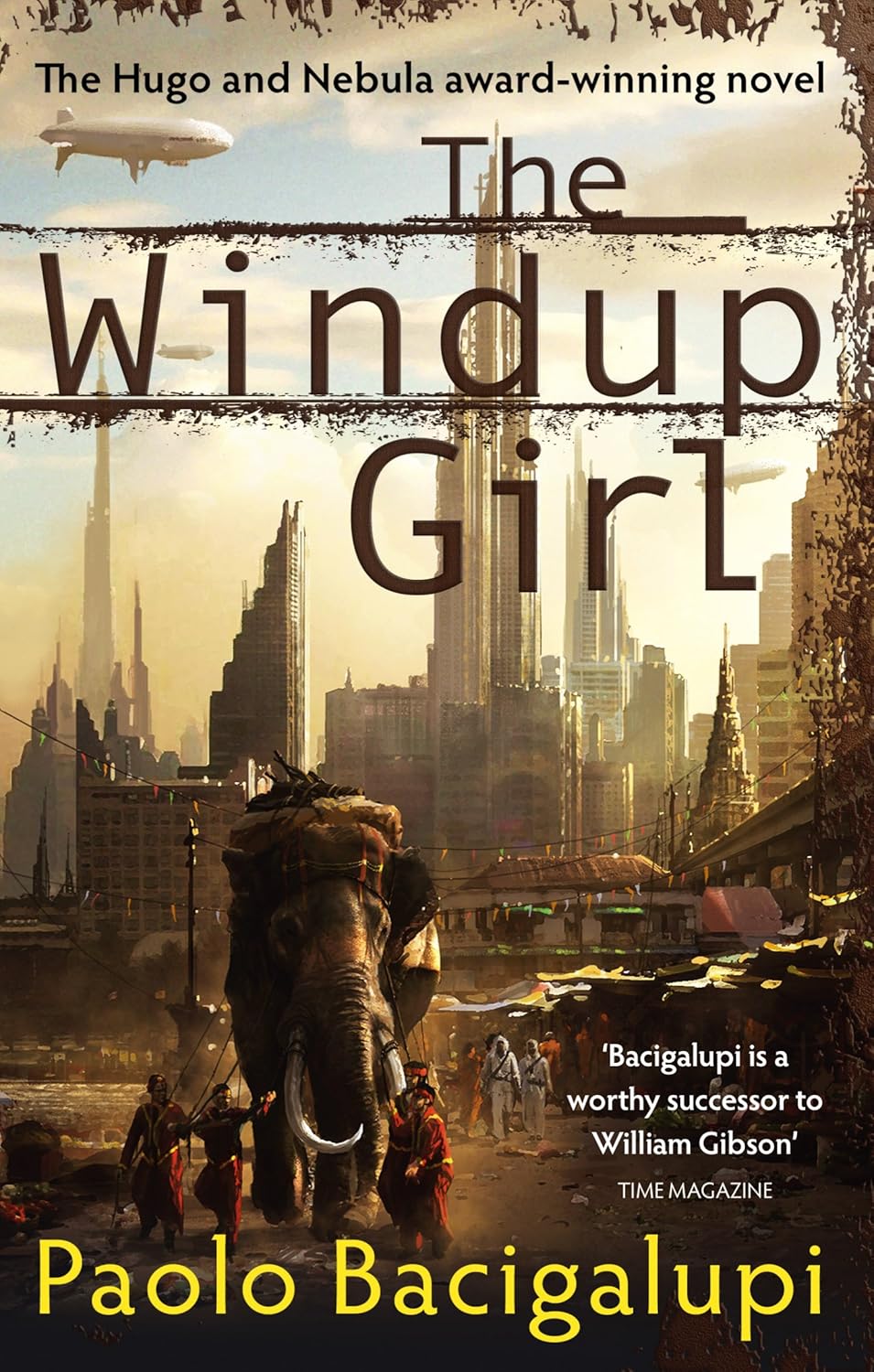
View on AmazonThe Windup Girl — Paolo Bacigalupi (2009)
Climatic biopunk, patented organisms. A future Thailand where calories are currency and seed companies wage biological wars.
View on AmazonGod's War — Kameron Hurley (2011)
The purest contemporary biopunk. Insects as technology, bodies as currency, and a war economy that runs on both.
View on Amazon Read My ReviewOn the Border
A genre that includes everything describes nothing, so here are three books I admire and don't call biopunk. All three pass the first question and fail the second: the flesh is everywhere, and nobody owns it.
Annihilation — Jeff VanderMeer (2014)
Area X is biology gone sovereign, and that's exactly the problem: there is no economy, no owner, no one profiting from the transformation. Weird fiction of the highest order, and one step outside the border.
View on AmazonThis World Is Full of Monsters — Jeff VanderMeer (2017)
A story grows a tree out of a man's skull and rewrites the Earth. Nobody engineers it, nobody profits, and the narrator ends up grateful. No biopunk protagonist thanks the system that ate him.
Read My ReviewChildren of Time — Adrian Tchaikovsky (2015)
Accelerated evolution as the engine of the whole book, and no biological ownership anywhere in it. Extraordinary science fiction, sitting on a different shelf.
View on AmazonAll the test tells you is whether the biology is load-bearing. It says nothing whatsoever about quality, and using a genre definition as a quality judgement is a category error I see made about weird fiction roughly once a week. Still: I'd rather run a shelf with a door on it than a shelf that holds every book with a tentacle on the cover.
Contemporary Voices
The scene today is more alive than it appears—but the label is rarely used. These authors are redefining the genre's possibilities.
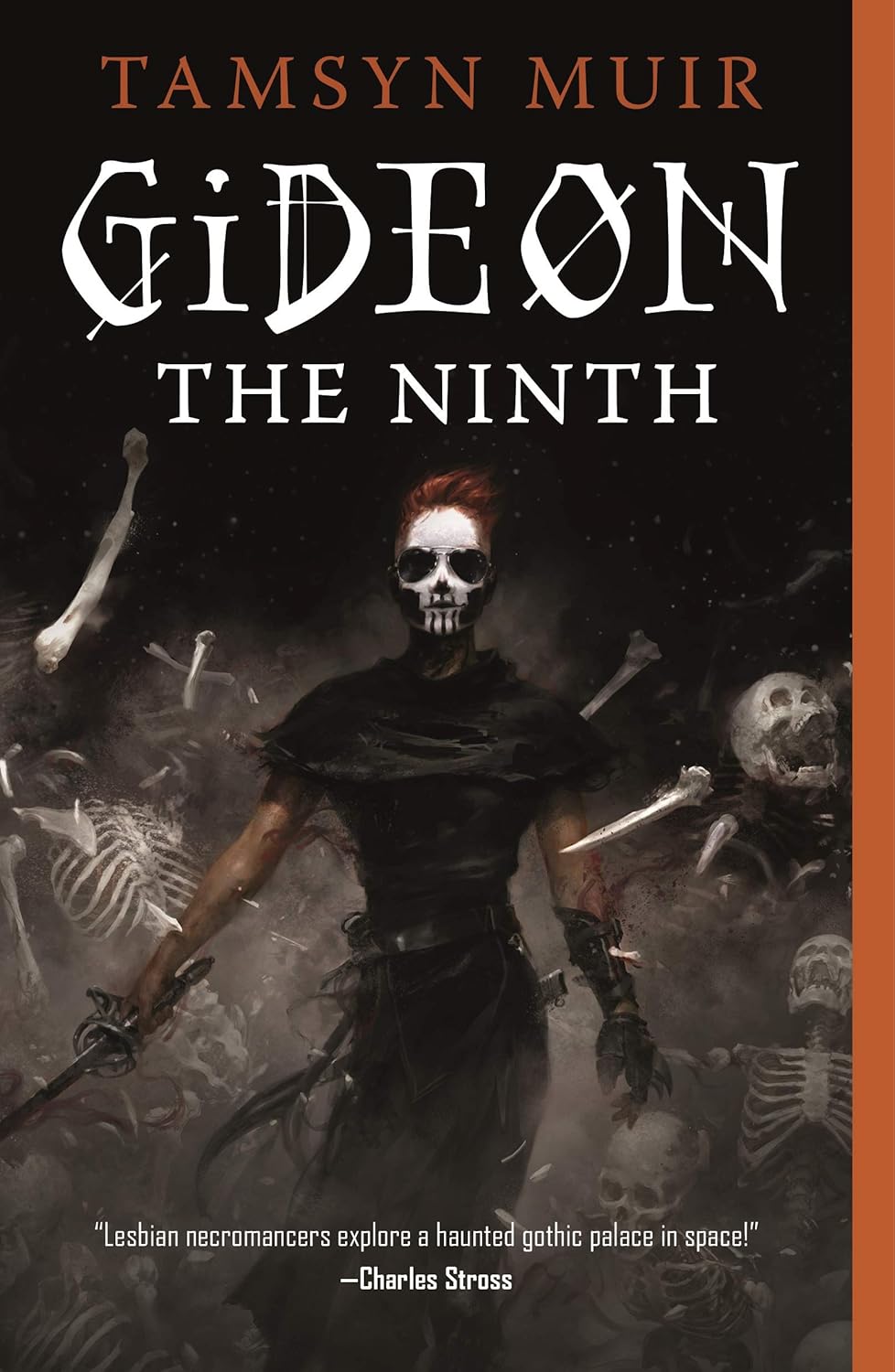
Gideon the Ninth (The Locked Tomb) — Tamsyn Muir
Necromancy as biology, bones and flesh as magical system. Muir's necromancers don't summon spirits—they manipulate tissues, bones, and bodily fluids with scientific precision masked as sorcery, and an Emperor decides who gets to.
View on AmazonThe Stars Are Legion — Kameron Hurley
World-ships made of flesh, where fertility is the only currency and wombs are negotiated, seized and transplanted between houses. Inherited biopunk with feudal politics.
View on Amazon Read My ReviewBorne — Jeff VanderMeer
Post-apocalyptic biopunk where engineered organisms roam a ruined city and the Company that made them is still the landlord. What is Borne? Part pet, part weapon, part child. VanderMeer at his most tenderly horrific.
View on AmazonThe Annual Migration of Clouds — Premee Mohamed
Post-apocalypse with symbiotic fungi. The protagonist hosts "clade"—an organism living inside her, shaping her thoughts and body. Quiet, literary biopunk about coexisting with what colonizes you.
View on AmazonThe Salt Grows Heavy — Cassandra Khaw
Body horror meets mythological fable. A mermaid and a plague doctor wander through landscapes of surgical horror. Khaw writes prose that seems to bleed.
View on AmazonMexican Gothic — Silvia Moreno-Garcia
Fungi, symbiosis, organic horror. A decaying mansion where the walls might be watching—or feeding—and a family whose entire fortune rests on what grows in the basement.
View on AmazonThe Spear Cuts Through Water — Simon Jimenez
Fantasy with literal divine body. The Moon goddess travels as an old woman, but her body contains the power that shaped the world—and an empire that rules by owning it.
View on AmazonVoices to Watch
Emerging authors pushing the genre into new territories:
Kameron Hurley, or "How to Do Biopunk Without Apologizing"

If I had to point to one author who embodies contemporary biopunk in its purest, most uncompromising form, it would be Kameron Hurley. Her Bel Dame Apocrypha trilogy—God's War, Infidel, Rapture—is the perfect example of how to build a completely biological world without ever, for a single second, softening the blow.
The setting is a planet devastated by a centuries-long holy war. But it's not the war that makes the series extraordinary—it's how that world works.
Insects are technology. Everything—lights, weapons, vehicles, communications—runs on genetically modified insects. There are swarms. Doors open responding to pheromones. Bombs are compressed hives. The "magicians" are people capable of manipulating insects with their minds, and their power is as feared as it is indispensable.
Hurley doesn't prepare you, doesn't coddle you, doesn't explain that in this world things work differently. She throws you in and lets you drown. Personally, I find this the highest compliment a writer can pay their audience: treating their intelligence with respect.
There are no clean heroes. Nyx is a former government assassin, a "bel dame." When we meet her, she's already fallen from grace, already damaged. Hurley doesn't offer redemption—she offers survival, at any cost.
God's War has been compared to what would happen if Joe Abercrombie wrote science fiction in the desert. It's brutal, dirty, biologically disgusting in ways other authors would avoid for fear of losing readers. And that's exactly what makes it important.
Run the two questions on it. Remove the bugs and there is no transport, no war and no magic. Remove the people who own the bugs and Nyx has no employers, no bounties and no reason to get out of bed. Two noes, which is as clean as this gets.
Hurley proved you can do biopunk without compromise. Her territory—deserts, insects, holy war—is specific. But the method is universal: take the biological premise seriously, follow it to its most extreme consequences, don't pull back. The Stars Are Legion is the interesting variation, because there the biology is inherited rather than engineered and the ownership turns feudal instead of commercial.
God's War — Bel Dame Apocrypha Book 1
The purest contemporary biopunk. Insects as technology, bodies as currency, biological magic.
View on Amazon Read My ReviewInfidel — Bel Dame Apocrypha Book 2
Nyx returns, more damaged than ever. The bel dames are hunting her now.
View on AmazonBeyond the Page
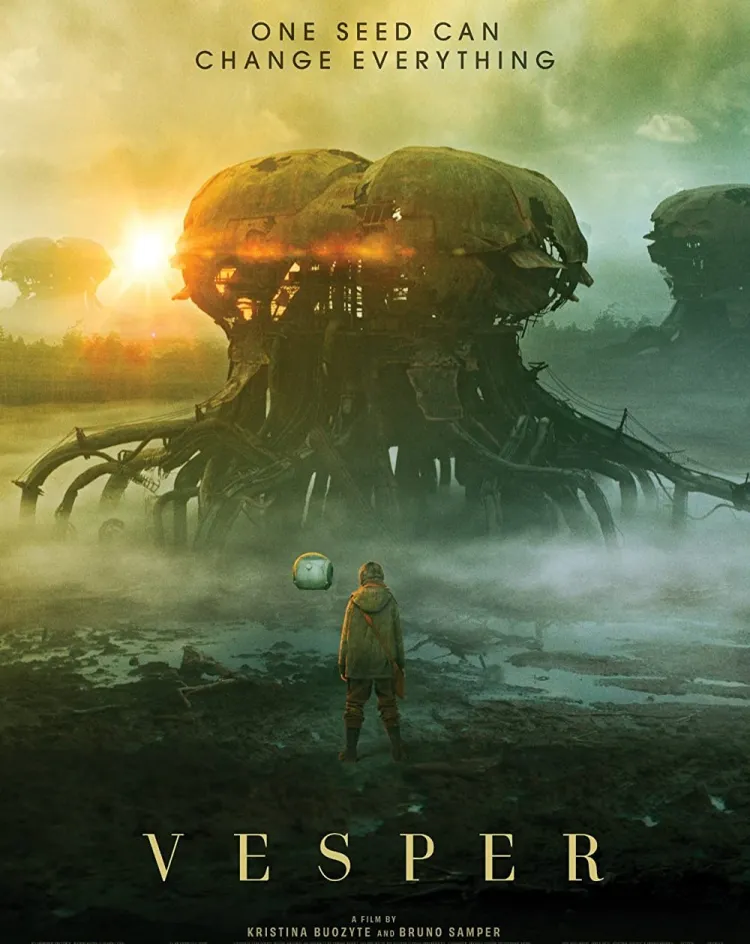
Cinema
- David Cronenberg's filmography (1983-1999) — The visual vocabulary of the genre
- Alien (Ridley Scott, 1979) — Proto-biopunk, biology as horror
- Tetsuo: The Iron Man (Shinya Tsukamoto, 1989) — Flesh-metal fusion
- Splice (Vincenzo Natali, 2009) — Genetic engineering as transgression
- Annihilation (Alex Garland, 2018) — Adaptation that amplifies the biological strangeness
Comics & Manga
- Akira (Katsuhiro Otomo, 1982-1990) — Mutation as apocalyptic power
- Parasyte (Hitoshi Iwaaki, 1988-1995) — Forced symbiosis, hybrid identity
- Blame! and Biomega (Tsutomu Nihei) — Infinite organic architectures
- Prophet (Brandon Graham et al., 2012-2016) — Extreme biological science fiction
Video Games
- Resident Evil series (1996-) — Virus as instrument of power
- Prototype (2009) — The body as constantly mutating weapon
- Scorn (2022) — Pure biopunk aesthetic, entirely organic world
- Hollow Knight (2017) — Inherited biopunk as metroidvania
The Current State: A Genre Without a Shelf
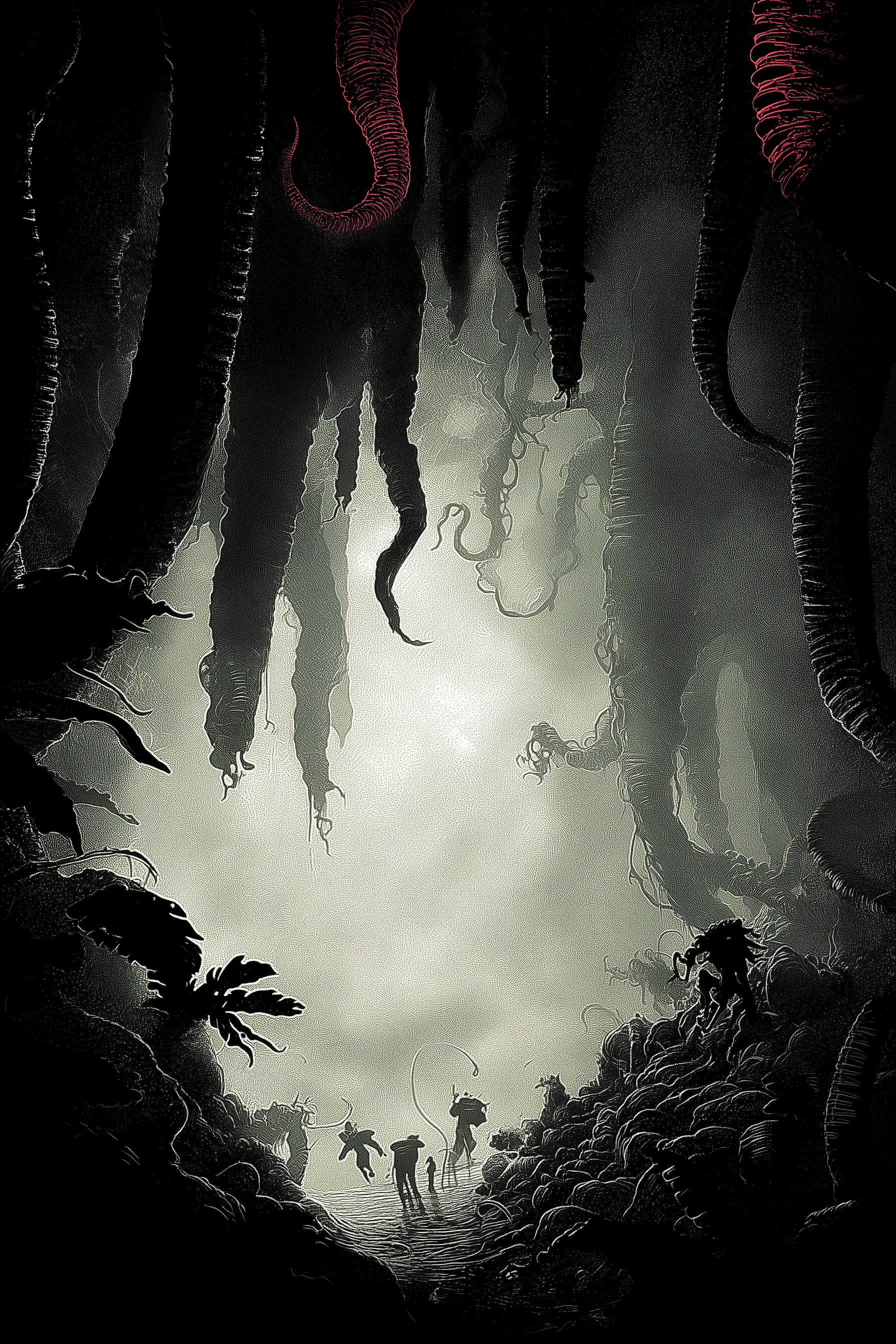
Biopunk remains a niche genre, but a niche that's expanding.
In the publishing market, pure biopunk is rare. Publishers tend to classify these works under more commercial labels: "science fiction," "dystopian," "weird fiction." There's no "biopunk" shelf in bookstores, no dedicated category on Amazon. This makes it hard for readers to find what they're looking for—and for authors to position themselves. (If, like me, you've had to publish your book in the "genetic engineering" category, you know what I'm talking about.)
However, interest is growing. The success of works like Annihilation (book and film) has demonstrated that an audience exists for organic science fiction, for stories where biology is both mystery and menace. The New Weird, while a broader movement, has normalized biological strangeness in contemporary fantasy. Paradoxically, in doing so it has also absorbed the genre and made it harder to recognize—which is precisely why the second question matters. Without it, biopunk dissolves into weird fiction and stops naming anything.
Inherited biopunk is almost nonexistent as a market category. Works that would qualify—Perdido Street Station, The Stars Are Legion—are sold as fantasy or space opera, because that's where the algorithm can price them. Readers seeking these stories have to assemble their own library through recommendations, niche forums, sideways connections.
The Biopunk Reader Profile
Who's looking for biopunk? Someone seeking fiction unafraid of the body, that explores disgust as a legitimate aesthetic emotion, that treats physical transformation as a serious theme. Often readers of literary horror, weird fiction, philosophical science fiction. They're not looking for action (well, not only!)—they're looking for atmosphere, ideas, worlds that defy categories.
The Future of Biopunk

We live in an era of biological anxiety. Pandemics, genetic engineering, biometrics, the control of reproductive bodies: biology is back at the centre of political argument in a way that '80s cyberpunk never saw coming. The eighties bet the future on hackers and digital corporations, and what turned up instead was viruses, vaccines, genetic patents and bodies under surveillance.
Biopunk can explore these anxieties in ways other genres cannot. It can build worlds where metaphors become literal, where living inside a giant organism isn't symbol but reality, where social classes are organs and rebellion is infection.
This is what I'm trying to do with Ravenous Mother.
The series takes place entirely inside a colossal living organism called the Mother. There's no stone, no metal, no sky—only flesh, membrane, and cartilage (and occasionally fungi). Nobody designed her and nobody remembers a time before her, so the world is inherited rather than engineered. Society is stratified into rigid castes, your profession is carved into your body where it can't be hidden, and at forty you are fed to the Mother because she has to eat. The priesthood administers the feeding and calls it cosmic balance.
That puts the series on the fourth step, where the flesh is the world and owning it becomes a theological problem, which is how you end up with a priesthood running the slaughter and calling it balance. Hunger does the work that money does elsewhere. And the sacred here is a matter of fact rather than of faith — you don't believe in the Mother, you know she exists, you live inside her, you came from her, and you'll go back to her, hopefully as late as possible.
By my own test that's biopunk on both counts, which is convenient for me and is also exactly why I want the test to be strict. A rule that lets my books in and nothing else out wouldn't be worth writing down. I still sell the series as a mix of biopunk, dark fantasy, and grimdark, because that's where readers can find it, and all three are genuinely in there. But the spine of it is biopunk from top to bottom.
Hurley blazed the trail with deserts and insects and holy war. The territory of body-as-world, society-as-anatomy, theology-you-can-chew—that remains to be explored.
Sources & References
- Book Riot: What Is Biopunk? - Accessible introduction with reading recommendations
- Wikipedia: List of Biopunk Works - Comprehensive list across all media
- Aesthetics Wiki: Biopunk - Visual and aesthetic analysis of the genre
- Meredith L. Patterson: A Biopunk Manifesto (2010) - The biohacking manifesto, delivered at UCLA
Comments