

Lessons from Abercrombie: What Writers Can Steal from The Heroes
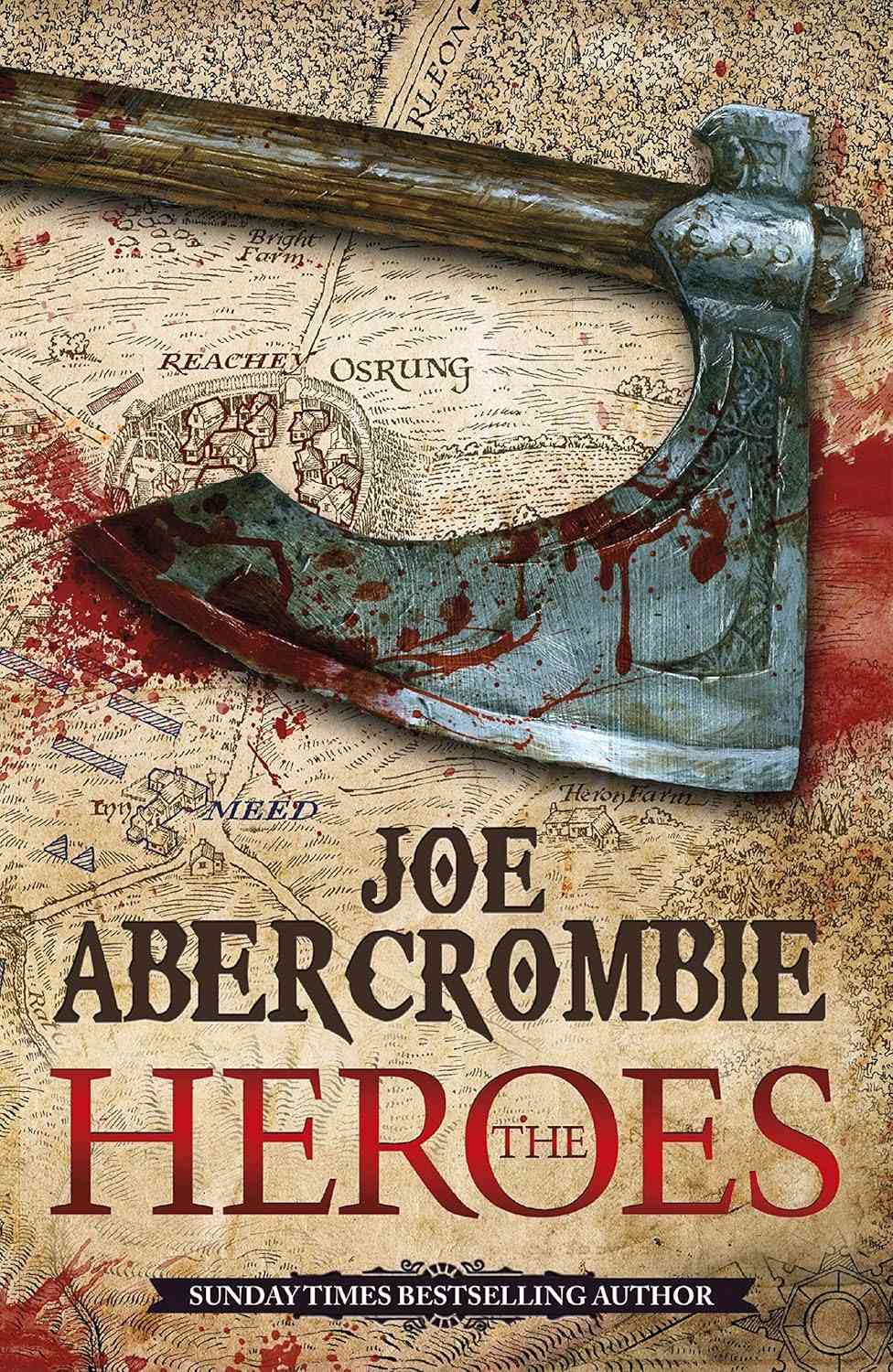
I don't think he really needs an introduction, but just to do things properly: Joe Abercrombie is one of the defining voices of modern grimdark, and The Heroes is often cited as his most structurally ambitious work. It's less famous than The First Law trilogy, but I consider it superior as a text for anyone who wants to steal learn no, actually STEAL from the best. A brilliant piece of craft :-)
What follows is a breakdown of specific techniques Abercrombie uses that any writer can steal. These are structural tools — they work regardless of your voice and genre.
On y va!
The Mirrored POV and Other Narrative Wonders
The most striking technique in The Heroes is what I call the mirrored POV. Two characters, in separate chapters, think the exact same thoughts about each other.
Colonel Felnigg despises General Mitterick.
In Felnigg's chapter, he thinks: "An arrogant pedant without imagination or initiative. The worst kind of soldier — one who masks his stupidity with discipline."
Three pages later, we're in Mitterick's head. And Mitterick thinks about Felnigg: "An arrogant pedant without imagination or initiative. The worst kind of soldier — one who masks his stupidity with discipline."
Same words, different speakers... and it works.
Sounds amateurish when you describe it, doesn't it? But the effect is remarkable. Abercrombie never tells us both men are hypocrites. He never intervenes to point out the irony. The irony seeps through their own words, involuntarily. The reader feels it without being told.
If you have multiple POVs, look for moments where two characters can judge each other using the same standards they fail to meet themselves. The reader will feel the irony without you saying a word.
Throughout the entire book, characters repeat the same phrase: "It's the sign of the times." It appears like a mantra, never changing — but the meaning shifts every time someone says it.
A veteran uses it to explain why loyalty doesn't exist anymore.
A politician uses it to justify betrayal.
A soldier uses it to excuse his own cowardice.
A general uses it to dismiss incompetence in his ranks.
I could go on like this for hours.
This is thematic glue: the repetition creates unity across twelve POVs and a sprawling narrative. Each time the phrase appears, it accumulates new weight, new bitterness. By the end, "the sign of the times" has become a cruel joke — everyone uses it, and everyone uses it to avoid responsibility.
Find a phrase that captures your book's central tension, put it in different mouths, in different contexts and let the meaning evolve through contrast.
Transitions are my weakness. I handle them with the confidence of a ten-year-old driving a truck on the highway.
Abercrombie is masterful at handing off narrative momentum between POVs. An element that closes one chapter gets picked up in the next — sometimes literally, sometimes thematically.
An order is sent. We see it leave in one POV. Chapter ends. Next chapter: we're with the messenger, and we watch the order get intercepted. Chapter after that: we're with the interceptors, deciding what to do with it. The plot thread never breaks. The reader never loses track. But the perspective keeps shifting, and with each shift we see the same events from a new angle.
This creates a cinematic effect — like a tracking shot following an object through multiple rooms. The reader feels continuity even as the voice changes.
I should tattoo this on my arms so I see it every time I write: it's the opposite of the jarring "meanwhile, elsewhere" transition that breaks immersion.
When ending a POV chapter, leave something active — an object in motion, a decision just made, a character walking toward something. Open the next chapter by picking up that same thread from another angle. The handoff should feel like a relay race, not a hard cut.
The Heroes takes place over three days.
The constraint creates urgency without manufactured stakes. Time itself becomes a structural engine — each day ends, a new day begins, and the situation has changed. The reader feels the clock ticking even when no character mentions it.
Worth considering if you're struggling with pacing, particularly in a saggy third act. External constraints force action. Give your characters unlimited time to make decisions, and they'll deliberate forever. Give them three days before the Selection, before the Stagnation arrives, before the Mother's biological cycle forces a crisis — and the plot moves because it must.
The constraint doesn't need to be time. Space works too — a siege, a trapped location. Or resources — dwindling supplies forcing hard choices. Or biology — a disease progressing, a pregnancy advancing. External pressure compresses decision-making and forces confrontation.
Abercrombie never puts two similar scenes back to back.
Action is followed by reflection; reflection is followed by political maneuvering; politics gives way to a quiet moment of humanity. Then back to action. A brutal fight scene ends; we cut to two old men talking about regret by a fire. The quiet scene ends; we cut to a panicked messenger trying to cross a battlefield under arrows.
The effect is that The Heroes never feels repetitive despite its length. The rhythm varies constantly. Tension is managed through variety, not through escalation alone.
This is a practical tool for outlining. After you draft a scene, categorize it: action, dialogue, introspection, politics, domesticity, horror,... Then look at your sequence: if you've got several action scenes in a row, something's wrong. Let them breathe! Then hit them again ;-)
What NOT to Copy
Abercrombie's style is not my style.
He writes in what I'd call third person limited with a visible narrator — occasionally stepping back to make an observation, to add a wry comment, to give the reader information the POV character doesn't have. His prose is expansive, atmospheric, sometimes decorative.
I write tighter. Third person so close it's almost first person in disguise. No narrator visible. No commentary. Every sentence does at least two jobs or it gets cut.
This isn't criticism. It's recognition that stylistic choices have structural consequences. The techniques I've described above — mirrored POVs, phrase-mantras, POV handoffs, time constraints, scene alternation — are structural. They work regardless of style. But if you try to copy Abercrombie's voice while working at a different scale, you'll produce something bloated and imitative.
Take the tools and leave the voice, just use what works for your scale.
Abercrombie is a master of precision. Every POV serves a purpose and every scene type is deployed intentionally
These techniques are now in my toolkit, feel free to steal them for yours.
Comments