

Next time, bring a couple extra oxygen tanks.
A scientist frees an intelligent alien and flees to their planet with 98 hours of oxygen. And when the air is almost gone, he accepts the only possible solution: transferring his consciousness into one of their bodies.
No way back.
First contact is a subgenre that has produced masterpieces and mountains of mediocrity. The difference, often, comes down to one simple question: what happens after the first encounter? Subject 1 by Jean Brady is about exactly that — and it handles it in an almost anti-climactic way: the consciousness transplant — the transfer of the protagonist's mind into an alien body — isn't the final climax (otherwise I'd be condemned to the special hell reserved for people who spoil books). It happens at the midpoint. The rest of the story explores the consequences.
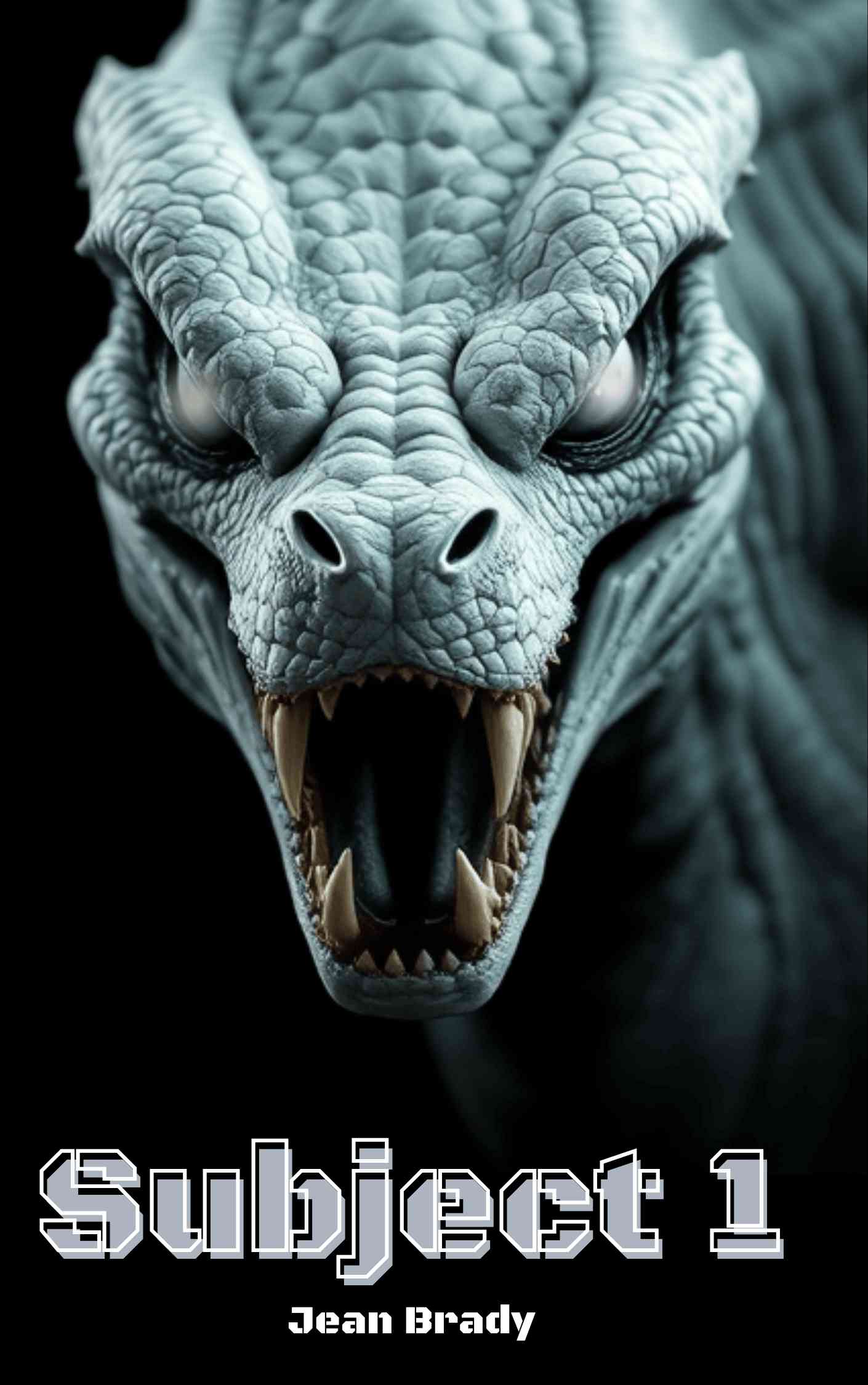
Allen is a scientist aboard the human ship that lands on Planet85, drawn by radio signals. The military captures a "White Astro Hexapod" — an intelligent creature, armored, nearly nine feet tall. Allen develops a bond with it and attempts communication. When his colleagues vote to kill it "to study its weak points," Allen sets it free. The choice has its consequences: the hangar depressurizes, a colleague dies, Allen flees to the planet with less than a hundred hours of oxygen.
(A quick side note: technically, Allen is the "villain," in the same way Jake Sully is in Avatar. They both betray their own species in favor of an alien one. In social psychology, this is known as in-group bias. And at least Jake Sully had the excuse that with Neytiri… well, you get the idea.)
From here begins the part I enjoyed most: Allen discovers a stratified alien society — the White Hex, the larger Giga Hex, a Queen who gives birth from her tail, living houses grown from seeds (hey! They stole my idea!). Brady has built a coherent and genuinely alien biology. Immersing myself in this worldbuilding was genuinely enjoyable.
When the oxygen drops to 2%, Allen accepts the offer from Major Primeped — a third alien species with advanced technology: transfer his consciousness into the body of a dead Giga Hex. From that point on, Allen can go back: he must survive as an alien among humans who see him as a monster (Avatar: take notes!).
As I said, having this twist happen at the midpoint is interesting — and a bold choice. The author sacrifices an easy plot twist and a convenient ending in order to let us explore an alien world, without turning the whole thing into a documentary. How does someone live after losing their own body? How do they communicate with the people who knew them before? How do they grieve what they were? Allen doesn't become a hero; he stays an impulsive scientist who made a questionable decision (questionable, I said — not wrong, it's a gray area. We're not quite at Grimdark yet, but Brady might discover someday that she prefers writing something closer to Joe Abercrombie than Robert Heinlein).
The prose is the main limitation. It works, but it has no voice. Brady writes in first person, which brings on the classic genre syndrome: too many "I felt," "I realized," "I knew." For a writer, this is the absolute worst. Readers are like Siberian wolves — they can smell fear. And too many "I [verb]" constructions reveal that the author is afraid the reader won't be able to connect the dots.
The alien descriptions are vivid — I enjoyed the bioluminescence, the armored skin that shifts color — but there's a density missing, the kind that turns competent prose into a distinctive style.
The pacing has its highs and lows. The first half is excellent: the in medias res opening creates immediate tension, and the flashback to the capture of Subject 1 keeps things moving. The central section — Allen among the Giga Hex and Major Primeped — drags with too much exposition. The ending recovers:
SPOILER — Click to expand
the action on the ship is tight, Subject 1's death lands at the right moment. The epilogue, though, is too on-the-nose. The final message ("If peace is ever possible, it starts with us. Until then, stay away") spells out what should have been left to the reader.
The alien characters mostly work. Allen is credible — empathetic, impulsive, morally gray. Subject 1 (the captured Hex, from whom the book takes its title) has presence despite being unable to speak. Snowflake (a young Hex) is emotionally effective — the "alien puppy" who marks Allen with its scent, saving him from the Queen. Hue, an intellectual Hex who loses a leg in battle, works well as a bridge between Allen and the alien world.
The secondary human characters, on the other hand, are the weakest point. Rosemary and John exist to move the plot forward, but they have no depth. Jumal, the security officer, has a narrative arc that could be surprising — from antagonist to a moment of redemption — but it's compressed into just a few pages. Their deaths end up hitting less hard because the reader never had the chance to know them.
For a debut — and I'm assuming it's a debut, since I couldn't find any other books by Jean Brady — this is a solid result. The hook is pitch-ready ("Scientist becomes an alien to survive" sells itself in a single sentence), the worldbuilding is generous, and the protagonist pays real consequences for his choices. It doesn't reinvent the genre, but it executes with competence.
A note for the author
Jean, if you're reading this: you wrote a good book. The Hex are yours — they're not Xenomorphs, they're not Na'vi, you built a coherent and genuinely interesting biology. The consciousness transplant as a midpoint instead of a climax is a courageous and correct choice. Allen is a credible protagonist you want to follow.
Prose is your weak spot. Show, don't tell.
If you ever revisit the book, cutting 5–8k words would improve the pacing noticeably. The epilogue feels a bit on-the-nose to me, but that's subjective. It's fine for a debut. What you need to do right now is trust your reader. DON'T EXPLAIN EVERYTHING! The wolves thank you.
You have real talent for worldbuilding. The Hex deserve more than one book. Work on the prose — read authors with a distinctive voice (Glen Cook, Kameron Hurley, Adrian Tchaikovsky) and study what they do differently. And trust the reader. Awoooo
ARC copy received in exchange for an honest review.
Comments