
Dark Fantasy: The Genre That Sleeps With the Lights Off
The dark isn't the exception. The dark is the architecture.
Author's Note
I'm guided by two principles that go hand in hand: I love order and I hate wasting time—mine or yours.
This article defines what dark fantasy is, how it works, where it came from, and where it's headed. If you're in a hurry, skip to the reading list at the end.
See also: 10 Essential Dark Fantasy Works, Biopunk Explained: Definition, Books & Why It Matters, and Grimdark: The Fantasy That Doesn't Lie.
What Is Dark Fantasy?
It's a fantasy subgenre. As my title says, among all its siblings, dark fantasy is the one that sleeps with the lights off. The standard, boring definition goes like this: fantasy that incorporates elements of horror, gloomy atmospheres, and a strong presence of the supernatural as a threatening force. Now, that definition is technically correct and practically useless (and misleading, too—it makes horror sound like the parent, when in truth it's a half-sibling, as we'll see). It could describe half the fantasy fiction published in the last fifty years.
Let's try to do better. Take a solid fantasy story. If the world it takes place in is permeated by a structural darkness—if the supernatural doesn't intrude on normality but is normality, and that normality is terrifying—then you're reading dark fantasy.
The difference from horror is one of those that, once stated well, you never forget: horror presents an intrusion. The world is normal, then something horrible violates it (Spike breaking into Buffy's house). The fear comes from the gap between the familiar and the impossible.
In dark fantasy, the fear—and the dread, and every negative emotion—is presented as the norm. There's nothing to violate; the world is already terrifying. The critic Dave Reed put it well in "What is Dark Fantasy?" (2021): in horror, the darkness is a shocking departure from reality. In dark fantasy, the darkness isn't strange or out of the ordinary at all. (N.B. I've paraphrased Dave here; if you want the whole thing, you'll find it here.) I put the distinction to the test on The Night Fair, and it actually came out horror, not dark fantasy—worth knowing before you pick it up.
And now we arrive at the distinction anyone who hangs around this site is expecting: the one with grimdark. Grimdark is defined by morality: nobody has clean hands, there are no right choices, only compromises. Dark fantasy is defined by atmosphere and cosmology: the world is steeped in the sacred and the terrifying, and the two are the same thing.
They can overlap—and often do (I ALWAYS write in the space between grimdark, dark fantasy, and biopunk; they're inseparable for me). But they're different tools. You can have grimdark in a bright setting—say, Renaissance politics with betrayals and assassinations. You can have dark fantasy with morally spotless heroes (noble monster hunters in a horrible world). Grimdark's question is: who's right? Dark fantasy's question is: what's out there, in the dark? Both genres produce their finest work when the answers aren't easy.
That said, like any self-respecting author, I don't believe in binding labels. Defining a work as dark fantasy, grimdark, or epic fantasy serves two purposes: helping readers find what they're looking for, and helping writers understand what they're doing. Let's leave the rigid categories to Amazon.
Where Does This Cheerful Genre Come From?
The genealogy is complex because dark fantasy didn't emerge from a single founding moment. Its roots sink into very different soil—and, incredible as it sounds, the term itself was coined twice, independently, by two writers who meant different things by it.
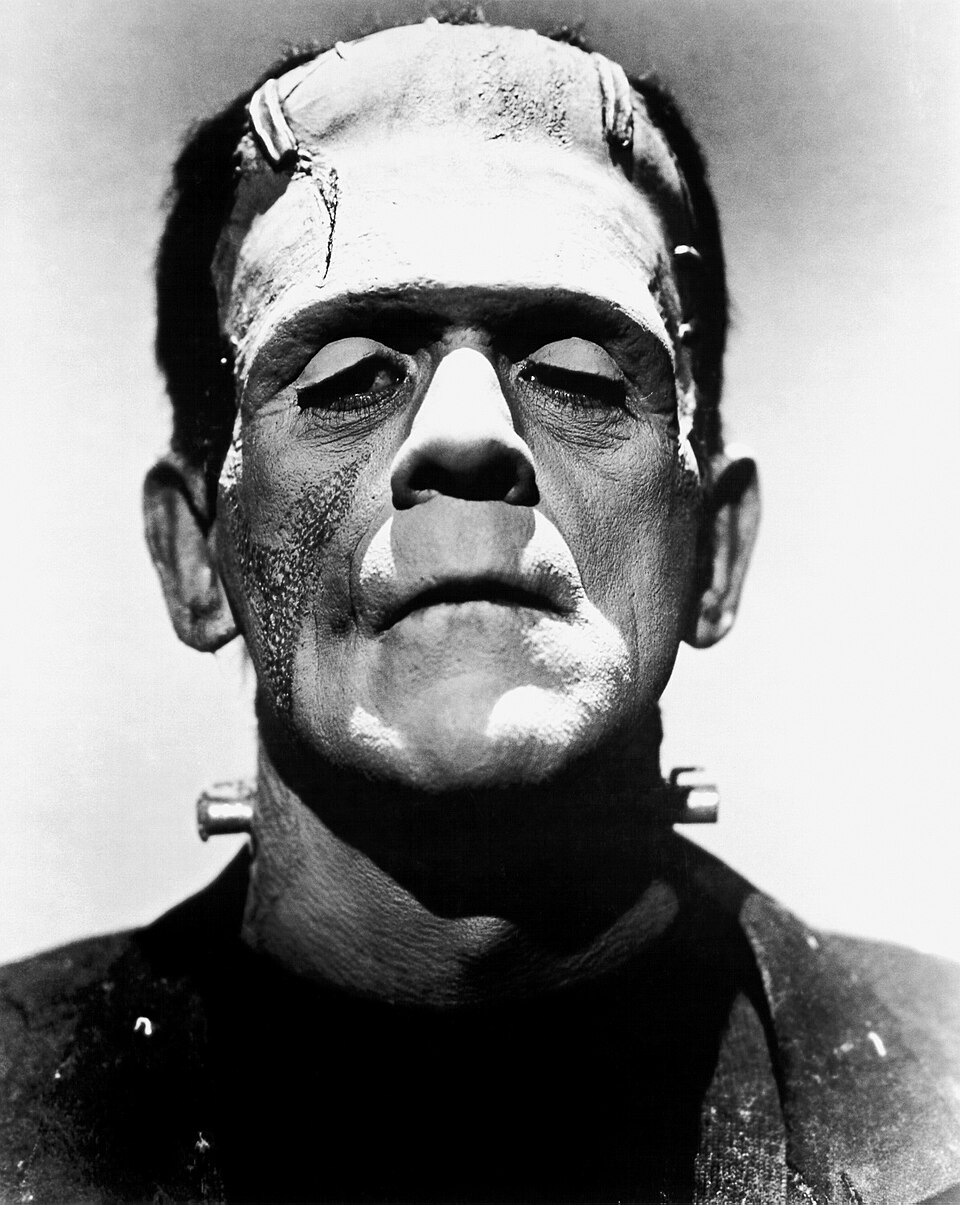
Let's start with the Gothic novel. Horace Walpole, Mary Shelley, Poe, Stoker: the Gothic established the emotional grammar that dark fantasy would inherit centuries later. We're talking oppressive architecture and forbidden knowledge, plus a very precise aesthetic taste: the interpenetration of beauty and terror.
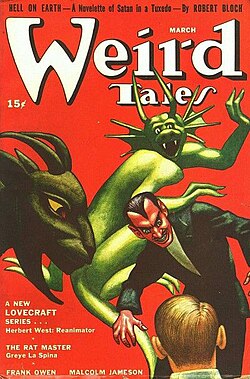
The real crucible was Weird Tales, the pulp magazine founded in 1923. Here the ingredients combined for the first time. Clark Ashton Smith (Amazon) created elaborate secondary worlds—Zothique (glorious!!!!), Hyperborea, Averoigne—each saturated with necromancy, cosmic despair, and sardonic beauty. Lovecraft called him unexcelled in "sheer daemonic strangeness." C.L. Moore, with her Jirel of Joiry stories (from 1934, the first female protagonist in sword & sorcery!), pioneered the fusion of supernatural landscapes with fantasy adventure, sending her characters through infernal vistas where atmosphere mattered more than action.
Then came the New Wave of the '60s and '70s, and Michael Moorcock. Editing New Worlds magazine, Moorcock championed moral complexity and literary experimentation. His Elric—a worthy representative of a decadent, dying civilization, dependent on a demonic sword that devours the souls of those he loves—was a deliberate anti-Conan and anti-Tolkien. His cosmology of Law versus Chaos, where neither is morally superior, also directly influenced Dungeons & Dragons and Warhammer.
And Mervyn Peake, with the Gormenghast trilogy (1946-1959), proved that dark fantasy can work through architecture and psychological oppression alone. Gormenghast contains no conventional magic, yet it's one of the most oppressive and atmospheric texts ever written. (Personal, entirely subjective note: Peake's prose isn't for me. It's so baroque and ornamental that, by contrast, Lovecraft reads like Hemingway.)
As I said, the term "dark fantasy" has two fathers—and with them, two parent genres:
Charles L. Grant (1942-2006), a horror writer, used it to describe atmospheric, suggestive horror—the kind that whispers instead of screaming—a strategy for distancing his work from the splatterpunk that dominated the '80s horror market (oh, how much we could say about splatterpunk! What we couldn't say about Clive Barker!).
Karl Edward Wagner (1945-1994), from the fantasy side, independently coined the same term for his Kane stories—sword & sorcery saturated with gothic horror and cosmic dread (no joke: next to him, Lovecraft reads like Brandon Sanderson. Wagner is a Lovecraft who discovered the joy of describing physical violence and nihilism). Wagner detested the phrase "sword and sorcery," which he said conjured "an image of yarns about girls in brass bras."
When the horror market crashed in the early '90s—publishers had flooded it with low-quality horror novels during the '80s boom—"dark fantasy" became what writer Lucy Snyder called "code for horror." Publishers rebranded supernatural fiction as fantasy, non-supernatural crime as thrillers, and the definitional muddle got worse (damn publishers).
That's why dark fantasy is one of the most contested territories in genre fiction: many claim it, nobody can define it unambiguously, and every tradition tends to shape its meaning according to its own sensibility.
The Themes
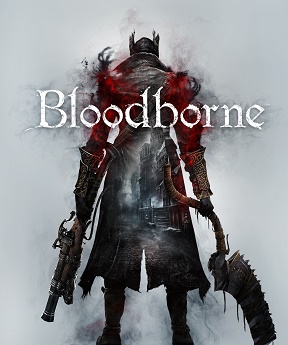
The numinous. Rudolf Otto coined the term in 1917 to describe the experience of the divine as mysterium tremendum et fascinans—simultaneously terrifying and fascinating, producing dread and attraction at once. Dark fantasy makes this concept its bible. Its gods aren't benevolent patrons or one-dimensional antagonists. They're often real and always terrifying. They inspire awe through incomprehensibility. Think of the God Hand in Berserk (already mentioned in my grimdark article), the Great Ones in Bloodborne, Kina in Cook's later books. The encounter with the sacred, in dark fantasy, never ends well.
Darkness as architecture. In standard fantasy, darkness is a narrative element: it's setting (the dark forest) or plot engine (the threat to be defeated). In dark fantasy, darkness is the infrastructure of the world. You can't defeat it because it isn't an enemy—it's the material everything is made of. Religious institutions function as instruments of control. Sacred spaces are corrupted not by external desecration but because the sacred itself contains darkness. Starless and Bible-Black takes this literally: dead gods, burned for fuel, heating the last cities at the end of time.
The impossibility of escape. This is a byproduct of the previous point. The protagonist can't leave the danger behind, go back to their "Shire," marry their love. There's no Shire in dark fantasy. The only way out is through—and it doesn't guarantee light on the other side.
The protagonist who chooses to go on. If in horror the protagonists are victims dragged into the nightmare, in dark fantasy they're heroes who choose to face the danger. That choice is the emotional heart of the genre.
The Sacred Monsters
These are the texts that defined the genre or explored its territories most completely.
Foundational Literature
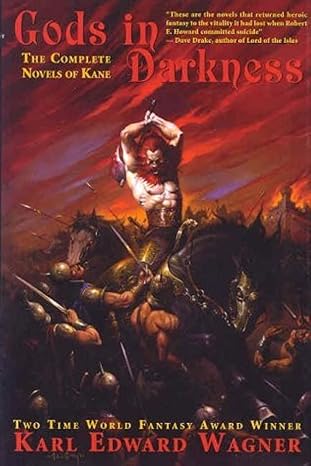
Kane — Karl Edward Wagner (1970-1985)
The work that gave the genre its name. Kane—immortal, red-haired, cursed by a mad god for killing his brother (the biblical Cain!)—isn't an anti-hero. Wagner hated that term and called him a "hero-villain": a consummate warrior and sorcerer who is frequently the antagonist of his own stories. A psychiatrist by training, Wagner practiced for less than a year before quitting everything to write. His stories end without comfort. Prophecies of salvation prove false. The "good guys" don't win. The British Fantasy Society renamed its Special Award the Karl Edward Wagner Award in 1997.
View on AmazonElric of Melniboné — Michael Moorcock (1961-)
The anti-Tolkien par excellence. A sickly emperor dependent on a demonic sword and drugs to survive, in a decidedly unpleasant universe.
View on AmazonThe Black Company — Glen Cook (1984-)
The work that changed everything. I covered it at length in the grimdark article, but the Black Company deserves space here too—because it's dark fantasy to the bone. I'll save it for the section on Cook, further down.
View on AmazonWeaveworld / Imajica — Clive Barker (1987-1991)
Barker began in pure horror (Books of Blood, Hellraiser) and progressively migrated toward dark fantasy. Weaveworld and Imajica are the destination: complete secondary worlds, with names, tribes, flora and fauna, religions and cults (P H E N O M E N A L). The shift from horror to dark fantasy meant, in his words, adding "a transcendental level." His Cenobites—beings from another dimension who can't tell pain from pleasure—occupy the exact border between the genres. They're not monsters. They're priests.
View on AmazonTales from the Flat Earth — Tanith Lee (1978-1988)
Her cosmological Flat Earth, inspired by The Arabian Nights and Babylonian mythology, is ruled by Lords of Darkness—Azhrarn (Prince of Demons), Uhlume (Death), Chuz (Madness)—and her prose is "poetically baroque" (which, honestly, is why I struggle to read her; but it's worth it). Lee was the first woman to win the British Fantasy Award.
View on AmazonContemporary Voices
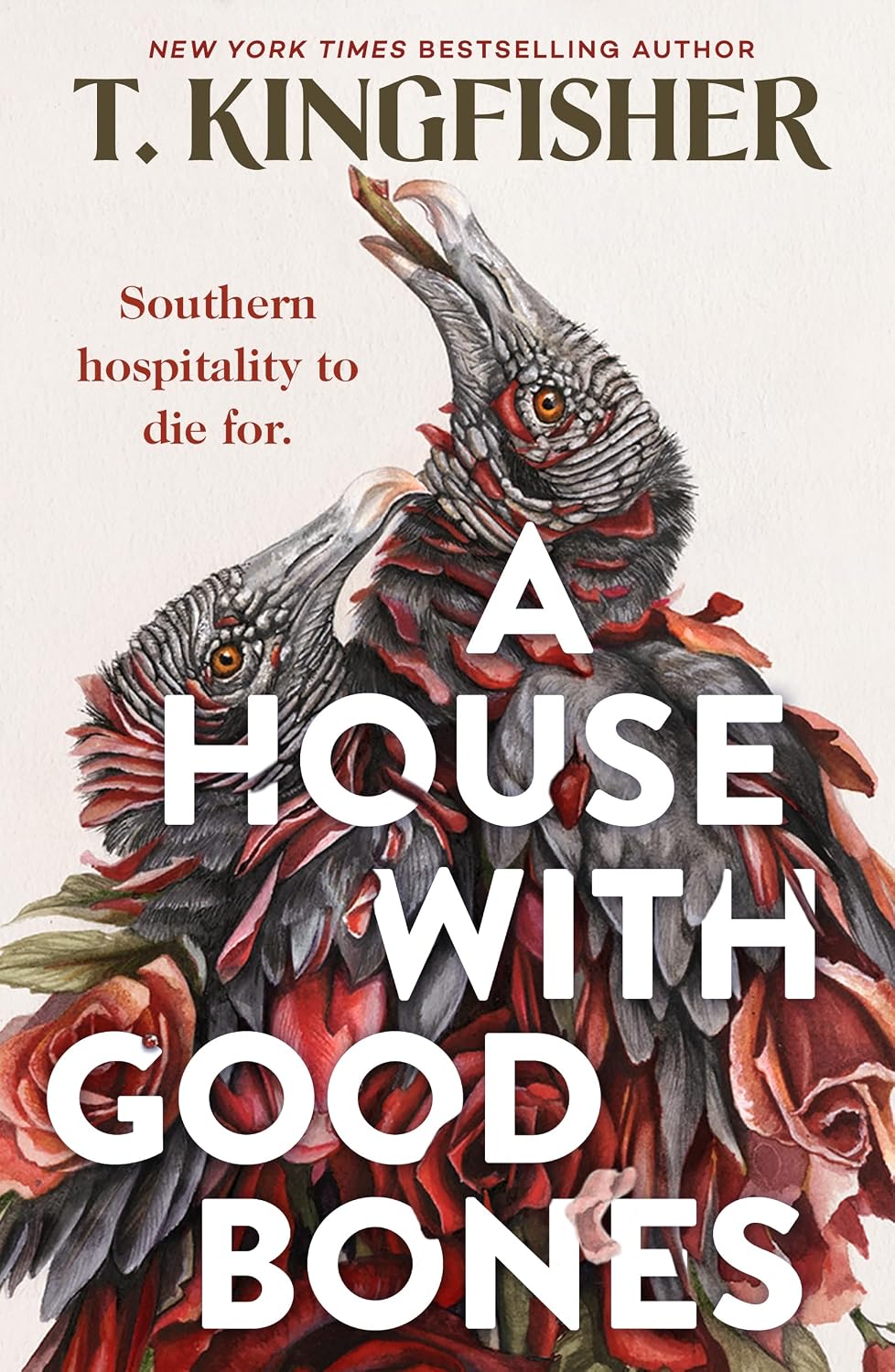
Nettle & Bone and more — T. Kingfisher
Perhaps the most important voice in contemporary dark fantasy. Kingfisher (pen name of Ursula Vernon) ranges across cosmic horror (The Twisted Ones, The Hollow Places), dark fairy-tale retellings (Nettle & Bone, Hugo winner), and literary horror novellas that reread Poe (What Moves the Dead, What Feasts at Night). She represents an incredible evolution: away from grimdark brutality, toward what we might call "dark with hope"—genuinely unsettling fiction that keeps its compassion and humor. If you like dark fantasy and/or grimdark, Kingfisher is your next purchase. Really. Reading her is MANDATORY.
View on AmazonA Master of Djinn — P. Djèlí Clark
A gorgeous panorama of West African griot traditions and Islamic folklore. In Ring Shout (2020) he reimagines the Ku Klux Klan as literal demons. A Master of Djinn builds an alternate steampunk Cairo (for those reading too fast, I'll repeat: an alternate steampunk Cairo!) where the djinn have returned to the world. P.S. we could probably call it more of a steampunk fantasy.
View on AmazonShe Who Became the Sun — Shelley Parker-Chan
Reimagines the founding of the Ming dynasty through a queer dark historical fantasy. I admit I haven't read it yet, but it's on my TBR. Plus the covers of their books are fantastic.
View on AmazonMexican Gothic — Silvia Moreno-Garcia
Lovecraft + Brontë in Latin America. Okay, it's not exactly dark fantasy, it's more a gothic horror (as the title says), but I couldn't leave it out of the close relatives.
View on AmazonThe Vorrh — Brian Catling
The Vorrh trilogy (2012-2018). Alan Moore called it (paraphrasing) "the first landmark work of fantasy of this century."
View on AmazonGlen Cook, or "How to Do Dark Fantasy From Inside the Trench"
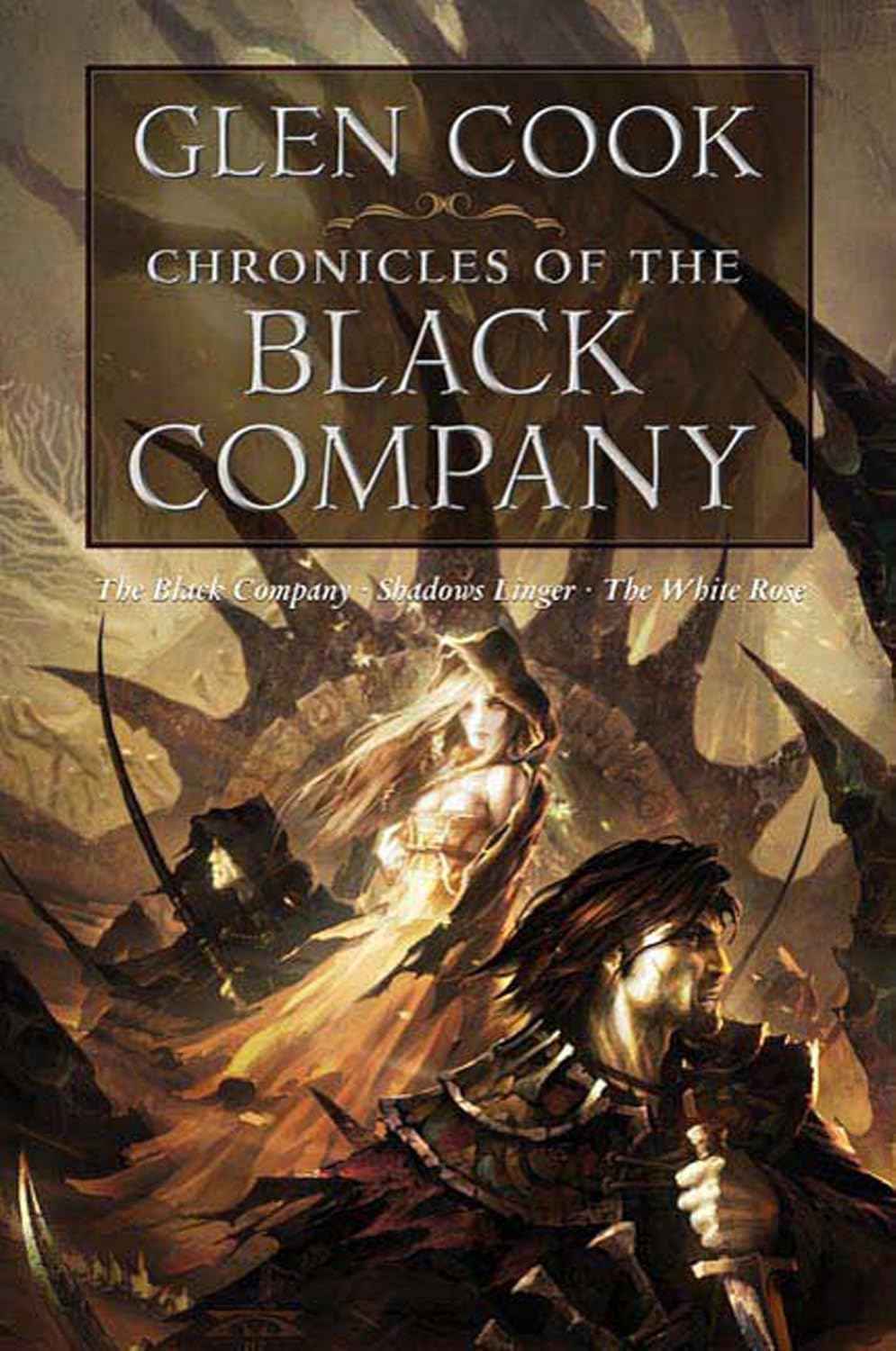
If I had to point to one author who embodies dark fantasy in its most profound form—not the flashiest, not the most extreme, but the most profound—it would be Glen Cook. I talked about him in the grimdark article as the father of modern military fantasy, but that's only half the story. Because the Black Company isn't just military grimdark. It's dark fantasy to the bone.
Steven Erikson declared that Cook "single-handedly changed the face of fantasy." But Cook's innovation wasn't only bringing military realism to fantasy. It was fusing the urban, intimate, slightly seedy tradition of sword & sorcery with the pastoral, epic, expansive tradition of heroic fantasy—and then infusing the whole thing with a supernatural horror that follows no rules, offers no explanations, and grants no comfort.
What makes the Black Company dark fantasy and not just military grimdark are the elements of supernatural horror. The Taken—the Limper, Soulcatcher, the Howler, Shapeshifter—are former enemies of the Dominator who were magically corrupted into his servants, a process that warped their personalities and bound them to centuries of servitude. The Howler screams constantly from centuries of torment. The Limper becomes a nearly indestructible revenant. They aren't merely powerful adversaries: they're people who were destroyed and rebuilt. A violation of individual autonomy that resonates as horror, not mere conflict.
In the later books, the demoness Kina emerges as a cosmic horror whose influence stretches across sixteen worlds. The supernatural in Cook's world is treated with genuine terror, not wonder. Magic has no clear rules. The powerful sorcerers aren't cool characters—they're things you run from.
Cook doesn't prepare you, doesn't coddle you. He throws you in and lets you drown. And that, as I wrote for Hurley and Abercrombie too, is the highest compliment a writer can pay their audience.
A personal note: Cook is 81 and still writing. He published Lies Weeping in 2025, the first book of a new five-volume arc. After forty years, the old soldier is still in the trench.
Beyond the Page
Cinema
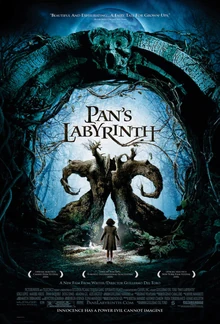
- Guillermo del Toro — The genre's filmmaker par excellence. Pan's Labyrinth (2006) uses fairy-tale structures not for escapism but to confront fascism (and it succeeds brilliantly). The Pale Man symbolizes predatory authority; the real monsters are human. It received 22 minutes of applause at Cannes. His broader body of work—The Devil's Backbone, Crimson Peak (explicitly "not a ghost story but a story with ghosts"), The Shape of Water (Best Picture Oscar)—consistently treats the monstrous as more honest than the institutional: it's his trademark, his obsession.
Video Games
- Dark Souls / Elden Ring (FromSoftware) — Worlds already dead or dying, where the player begins at the end of the Age of Fire. The cosmology is cyclical and potentially futile: others rekindled the flame before, and it always faded. Bloodborne (2015) is perhaps the most refined result: it begins as Victorian gothic horror and progressively reveals itself as Lovecraftian cosmic horror through the Insight mechanic—as the player gains forbidden knowledge, invisible entities become visible, literally changing the world. Elden Ring (2022), with George R.R. Martin at the mythological base, sold over 25 million copies in its first year. Miyazaki called it "a classic dark fantasy title" and described the process as taking Martin's relatively human characters and "misshaping them and distorting them into something they were not."
Comics & Manga
- Berserk (Kentaro Miura, 1989-) — Perhaps the most influential work of dark fantasy in any medium since the '90s. The Eclipse—where Griffith sacrifices his Band of the Hawk to demons to achieve godhood—is that scene you rewatch on YouTube a thousand times (as far as the anime goes). The God Hand operates according to an "Idea of Evil": the universe itself conspires against human happiness. Berserk's influence on Dark Souls is obvious.
- The Sandman (Neil Gaiman, 1989-1996) — The first comic to win the World Fantasy Award. Morpheus, Lord of Dreams, operates in a cosmology where stories themselves are supernatural forces.
- Hellboy (Mike Mignola, 1994-2016) — Folklore, cosmic horror, and the tension between destiny and choice, all wrapped in a visual aesthetic that redefined dark fantasy in comics.
The Current State: A Genre Expanding
Dark fantasy has never been so alive, so diverse, and so commercially vital as it is now. Sales in the Fiction/Fantasy/Dark Fantasy category have grown enormously, making it the second-fastest-growing fantasy subgenre.
But the genre is simultaneously expanding and fragmenting. Instead of a single "dark fantasy" category, publishers now market toward micro-niches: dark fairy-tale retellings, gothic horror-fantasy, dark historical fantasy, dark academia, post-colonial gothic (yes, it exists as a subgenre!), dark romantasy, queer dark fantasy. BookTok has been a major engine, especially for dark romantasy, with viral hits producing dizzying sales spikes.
I'll state the obvious, but the best dark fantasy is dark fantasy because it has to be. Berserk couldn't explore betrayal and loss without the Eclipse, just as The Black Company couldn't show what it means to serve evil without the Taken.
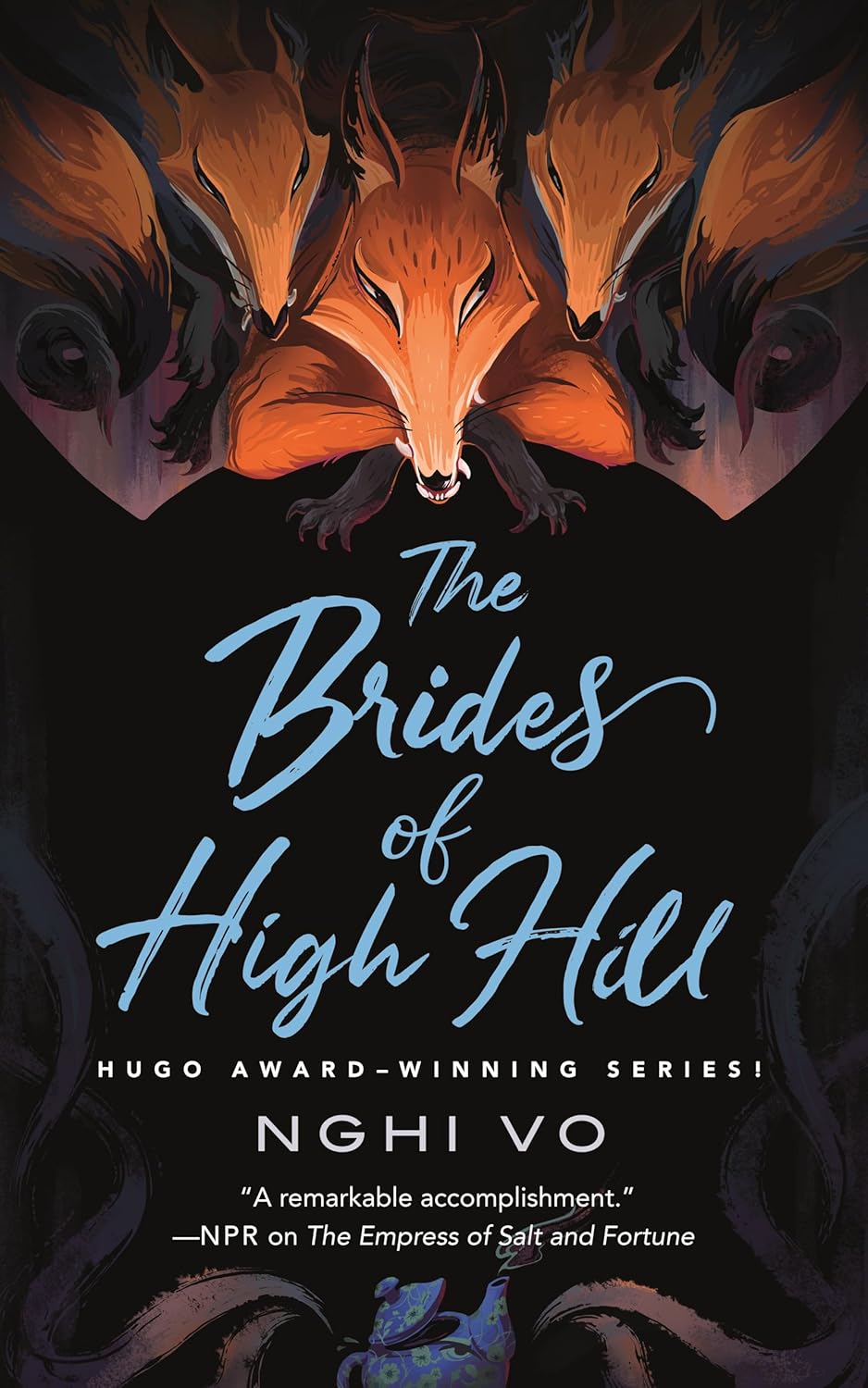
The most significant trend is the shift from grimdark brutality toward emotional complexity. There's a deep line of continuity running from Wagner's Kane to Cook's Black Company to Miura's Guts to Miyazaki's Tarnished. They're all protagonists defined by endurance in worlds where everything is hostile. Wagner, as usual, saw it more clearly than anyone. He called himself "more of a horror writer than an action writer" and described his worldview as "nihilistic, anarchistic and absurdist." And yet the Kane stories contain the genre's signature: dark fantasy's mark isn't despair but the discovery that hope persists precisely because the darkness is absolute. The meaning of life is to endure, endure, endure. With nails and teeth, always, even if you won't win.
This is what I'm trying to do with Ravenous Mother.
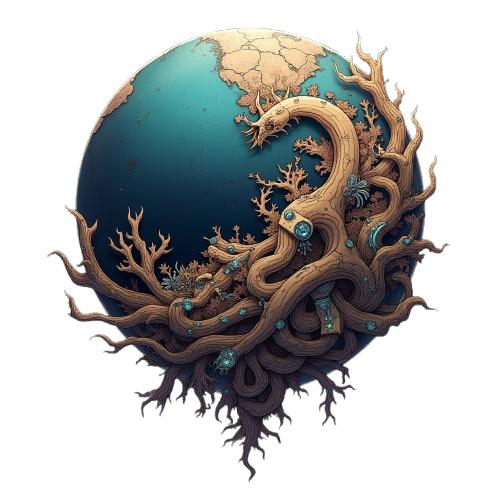
The series takes place entirely inside a colossal living organism called the Mother. No stone, no metal, and—like any good dark fantasy—no mercy.
I said in the biopunk article that Ravenous Mother's environment is biopunk. I said in the grimdark article that its moral approach is grimdark. Now I complete the trilogy: Ravenous Mother's soul—its atmosphere, its cosmology, its characters' relationship with the sacred and the terrifying—is dark fantasy.
Ravenous Mother is dark fantasy with grimdark situations in a biopunk environment. And the environment isn't just backdrop—it's character, deity, and prison all at once.
Every theme dark fantasy orbits—the numinous as architecture, the sacred indistinguishable from terror, the impossibility of escape, the choice to go on anyway—becomes literal infrastructure. The Mother is the world, is the divine, is the threat. And my characters can't look away, because there's no "outside" to look toward.
Sources & References
- Dave Reed: What is Dark Fantasy? (2021) - The horror-versus-dark-fantasy distinction, stated better than most
- Bookish Brews: 18 Best Dark Fantasy Books & a Discussion on the Genre - A great overview with a diverse reading list
- Lucy Snyder: On Dark Fantasy - Critical analysis of the genre's definition and boundaries
- Arcadia: Theory of Fantasy Literature 102 — On Dark Fantasy - Theoretical framework for dark fantasy in fantastic literature
Comments